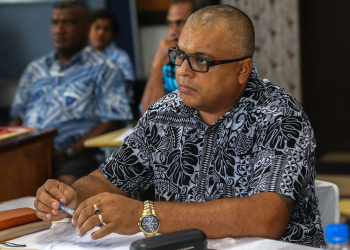
Fiji’s Parliament has agreed to fast-track the Boselevu Vakaturaga or Great Council of Chiefs Bill 2026, allowing the legislation to be dealt with without the usual procedural steps — including referral to a parliamentary committee. The motion was moved by iTaukei Affairs Minister Ifereimi Vasu and approved by the House on Tuesday, according to FBC News, over the objection of opposition MP Jone Usamate.
Key facts
- The legislation is the Boselevu Vakaturaga or Great Council of Chiefs Bill 2026, carrying its name in both Fijian and English, FBC News reports.
- The motion approved by the House has three effects: the Bill can be taken up without delay, it can pass through one stage in a single sitting, and it does not have to be sent to a Parliamentary Standing Committee.
- Vasu, the minister responsible for iTaukei Affairs, moved the motion and told MPs the Bill concerns an institution of significant customary importance and its relationship with iTaukei governance, culture and heritage.
- Vasu asked MPs to back the timetable so the Bill can be dealt with inside the current parliamentary term.
- Usamate objected, saying MPs need more time to examine the contents, and argued the Bill affects everyone in Fiji, not only iTaukei.
- FBC News does not report the margin by which the motion carried, nor name other MPs who spoke for or against it.
Why the committee bypass is the substance of the decision
Of the motion’s three effects, two are about speed. The third changes what scrutiny the Bill receives at all.
Referral to a Parliamentary Standing Committee is the stage at which a Bill stops being a government document and becomes something MPs can interrogate in public: officials are called, questions are put on the record, and members who are not ministers get to test the detail before the House votes. Fiji News has covered that process at work in other inquiries, including committee hearings where officials are questioned in detail and produce figures that would not otherwise have reached the chamber. Under the motion Parliament passed on Tuesday, that stage does not happen for the Great Council of Chiefs Bill.
Vasu framed the timing as a matter of the electoral clock rather than of avoiding scrutiny. He said he considered it important that Parliament “have the opportunity to address this institution’s framework during its present term”, FBC News reports, and urged members to support the timetable so the Bill could be considered within the time available. The report does not record him giving a reason, beyond time, for dispensing with committee referral.
The opposition objection
Usamate did not dispute the significance of the Bill — he described it as historic, and said its passage would be a historical occasion. His argument was about scrutiny. He told the House that he, and in his view most members on the opposition side, believed more time would allow a more thorough examination of the legislation.
He also pushed back on the idea that this is an iTaukei-only matter. FBC News quotes him saying: “This is a big law, which encompasses and it impacts on all of the iTaukei in this country, not only the iTaukei, but everybody in this country because the GCC has an impact on everybody.” That framing matters procedurally as well as politically: a committee stage is the main route by which Fijians outside the House, iTaukei or not, can put submissions to MPs on a Bill. The report does not record a minister replying directly to the point.
Why the chiefs council is contested ground
The reason a timetable motion drew an objection at all is that the standing of the Great Council of Chiefs is itself unsettled in Fijian politics, and has been argued over in forums well beyond iTaukei affairs. Fiji News reported earlier that Ratu Tevita backed a role for the chiefs council in the constitution debate — an argument about where the institution sits in Fiji’s governing arrangements, not merely how it administers its own affairs. A Bill that sets the council’s framework in statute touches the same question, which is the context in which Usamate’s call for more examination time should be read.
FBC News’s account of Tuesday’s sitting does not connect the Bill to that constitutional argument, and does not attribute a position on the fast-track motion to any of the coalition partners individually.
What is not yet known
Several things are unresolved in the reporting. FBC News does not publish the text of the Bill or summarise its clauses, so the composition, powers, appointment rules or funding of the Boselevu Vakaturaga under the proposed framework are not described. No date is given for the stage at which MPs will vote on the Bill itself, beyond Vasu’s stated aim of acting inside the current parliamentary term.
Nor does the report say whether the government intends to consult chiefs, provincial councils or the public outside the parliamentary process, now that referral to a standing committee has been bypassed — the question Usamate’s intervention effectively puts to ministers.
A note on sourcing
This account rests on a single outlet: FBC News’s report of Tuesday’s sitting. At the time of writing, Fiji News had not found a second published report of the motion from another Fijian newsroom, and Parliament’s own Hansard record of the debate was not yet available to check the quotations against. Where this article summarises what was said in the chamber, it is summarising FBC News’s reporting of it. Fiji News will follow the Bill’s progress through the House, add the Hansard record and any further reporting when they appear, and report the outcome of the vote when it is taken.
Frequently Asked Questions
Does the vote mean the Great Council of Chiefs Bill is now law?
No. According to FBC News, what Parliament approved on Tuesday was a motion on the Bill’s timetable, not the Bill itself. Opposition MP Jone Usamate spoke of the occasion as historic only “if it passes”, which indicates the vote on the legislation was still ahead.
What does the fast-track motion actually change?
FBC News reports three effects: the Bill can be taken up without delay, it can pass through one stage in a single sitting, and it does not have to be referred to a Parliamentary Standing Committee first. The third is the substantive change, because committee referral is the stage at which MPs normally question officials and take evidence on a Bill before voting.
Do the reports say what is actually in the Bill?
Not in detail. FBC News reports iTaukei Affairs Minister Ifereimi Vasu describing the proposed legislation as concerning an institution of significant customary importance and its relationship with iTaukei governance, culture and heritage. No clauses, structures, appointment rules or funding arrangements are set out in the report.
Is there a date for Parliament to decide on the Bill?
FBC News gives no date. It reports Vasu urging MPs to back the timetable so the Bill can be considered within the time available during the current parliamentary term, and that the motion permits passage through one stage in a single sitting.
Does the Great Council of Chiefs matter to Fijians who are not iTaukei?
Usamate argued that it does. According to FBC News, he told the House the Bill impacts all iTaukei in the country and not only the iTaukei, because the GCC has an impact on everybody. The report does not record a government response to that specific point.