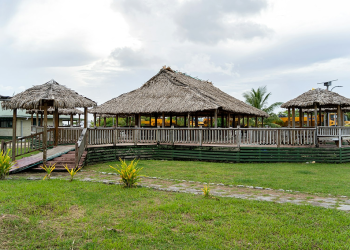
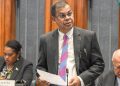
Prime Minister Sitiveni Rabuka has told world leaders that once they know the human cost of climate change, failing to act is a choice. He was speaking at the Ecumenical and Interfaith Sunday Service in Nadi, the first event on the Pre-COP31 schedule and hosted by the Pacific Conference of Churches, the regional grouping of churches, the Fiji Sun reported on 4 October.
Key facts
- “Once we know, doing nothing is no longer neutral. It is a choice with a human face,” Mr Rabuka said, according to the Fiji Sun.
- Pre-COP31 opened in Nadi that day; ministers and negotiators were to meet there during the week, while world leaders travelled to Tuvalu.
- Mr Rabuka asked leaders to keep the promise to limit global warming to 1.5 degrees Celsius.
- He said Fiji and Pacific leaders would push for money to reach affected communities “not someday, but now, as an act of justice not charity”.
- Christian, Hindu and Muslim leaders, delegates and young people attended; Archbishop Peter Loy Chong, head of the Catholic Church in Fiji, backed the call for justice.
Why it matters
Fiji is hosting the officials who prepare the ground before a COP summit, so the language settled on in Nadi this week is the language Pacific governments will carry into the formal negotiations. Mr Rabuka’s framing — that the region carries “a burden that we did not create”, and that climate change is “not only a scientific problem, or an economic one, it is a moral one” — puts responsibility rather than aid at the centre of that pitch, per the Fiji Sun. He also urged leaders to come to the Pacific, see conditions for themselves and listen to front-line communities.
For Fiji’s economy, the unresolved question is the form of the money as much as its volume. Finance delivered as concessional loans still has to be repaid out of national budgets that already absorb cyclone rebuilding, which is why Tuvalu’s argument that it should not have to borrow its way out of the climate crisis sits so close to Mr Rabuka’s “justice not charity” formula. Neither the amount sought nor the instrument was spelled out at the service.
‘This is our cry’: the church leaders
Archbishop Chong told the service how the Rewa River flooded and swallowed his family home when he was a boy, according to the Fiji Sun. “This is our Tagi, this is our cry and we want you to listen to this cry,” he said. Holding the opening in a place of worship, with leaders of three faiths present, made the start of Pre-COP31 a religious occasion before a technical one.
The legal backing for ‘justice not charity’
That phrase is doing legal work, not only rhetorical work: Pacific campaigners spent years building a basis for it, which is why it now opens a host government’s summit week. The Daily Maverick reported that the International Court of Justice, acting on a United Nations General Assembly resolution led by Vanuatu, delivered an advisory opinion in July 2025 in which the judges unanimously held that a nation’s failure to protect the climate system could be an internationally wrongful act. Vishal Prasad of Pacific Islands Students Fighting Climate Change, the campaign that drove the case, called the ruling a lifeline for front-line Pacific communities.
One caveat on sourcing: the Fiji Sun’s account is the only report of Sunday’s service available for this piece, and every quotation above rests on it; no second outlet’s version has been located. The Daily Maverick report makes no reference to Pre-COP31 or to Mr Rabuka.
More from Fiji News
Frequently Asked Questions
Did Mr Rabuka say how much climate finance Fiji wants, or by when?
No. The Fiji Sun’s report of the Nadi service attaches no dollar figure, no fund and no deadline to his call; it records only the direction of the ask — that money reach affected communities immediately. Any specific numbers would have to come from the ministerial sessions later in the week, which the report does not detail.
What did the church leaders raise besides climate change?
Archbishop Peter Loy Chong said Fijians were vulnerable “not only to climate change but to environmental exploitation”, naming those who extract gravel and sand, according to the Fiji Sun — widening the service’s message from emissions abroad to resource extraction at home.
What remedies did the Pacific-backed ICJ opinion open the door to?
The Daily Maverick reported that nations primarily responsible for global warming through their emissions could face legal repercussions for harm inflicted on other countries, and that reparations can include restitution, compensation and satisfaction, such as public acknowledgement. Judge Yuji Iwasawa said a state’s failure to act — including through fossil fuel production, the granting of exploration licences or the provision of subsidies — may constitute an internationally wrongful act.
Who else is pressing demands at Pre-COP31 in Nadi?
Our earlier reporting covered Pacific youth and women pressing for seats at the Nadi talks and villagers bringing relocation stories to Nadi.