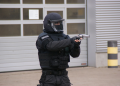
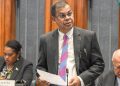
The mayor of Saint-Denis, a suburb north of Paris, was treated for the effects of tear gas after stepping between riot police and school students on a day French authorities counted more than 266,000 demonstrators nationwide. Bally Bagayoko was caught in the gas on Tuesday, 6 October, as police moved on protesters, according to Yahoo News UK and International Business Times Singapore.
The accounts differ on where he intervened. The ABC places him with students marching in Saint-Denis; Yahoo News UK and International Business Times Singapore put him inside a larger march through Paris.
Key facts
- About 56,000 of the 6 October demonstrators were in Paris, Yahoo News UK and International Business Times Singapore report, citing French authorities. Leadership puts the national turnout lower, at more than 250,000.
- Police used tear gas and water cannons in parts of Paris and Lyon, say Yahoo News UK and Leadership.
- At least 215 students and 715 police officers have been injured since the protests began, per the ABC.
- Arrest totals diverge: the ABC gives more than 6,000 since the protests began; Leadership cites the Interior Ministry for more than 5,000, with minors making up about 85 per cent; International Business Times Singapore counts nearly 500 on 6 October alone.
- Footage published by Reuters and described by the ABC showed Bagayoko receiving eye drops from supporters as students chanted his name.
Those tallies are not interchangeable. Two are running totals stretching back to mid-September while the third covers a single day, they rest on different sources — an interior ministry count in one case, outlet reporting in others — and they were published at different points in a week when the numbers moved daily.
Why it matters
The demonstrations fall six months out from a presidential election to replace Emmanuel Macron, who has served his maximum of two terms, with polling showing National Rally candidate Marine Le Pen as the front-runner, the ABC reports. How police handled teenagers has become part of that contest.
Prime Minister Sebastian Lecornu told the nation on Wednesday that the students’ demands were “legitimate”, while describing the protests as the most violent student demonstrations in decades, according to the ABC.
What the mayor said
Bagayoko told Reuters, in remarks carried by the ABC, that he moved into the middle of the confrontation to protect others and to ask officers to stop. “There was a moment when they decided to charge, and so I put myself in the middle,” he said, adding that many of the students had shown no aggressive behaviour towards police.
Speaking to Yahoo News UK, he called the use of force “totally disproportionate” and urged the Interior Minister to review police directives urgently before a tragedy occurs. The same report has him asking protesters to stay united and non-violent, and saying young people spontaneously formed a human shield around him as clashes broke out.
On broadcaster RTL afterwards he pressed for de-escalation and negotiations, warning that France risked a serious human tragedy, International Business Times Singapore reports. His wider argument, per the ABC, is that the response should be political rather than police-led, because the state allocates fewer resources to working-class neighbourhoods than to affluent Parisian ones.
Policing under scrutiny
A 15-year-old student in the northern town of Lens had his hand blown off after picking up a police sting grenade, the ABC reports; Yahoo News UK says another student, in Tours, lost the use of an eye. Interior Minister Laurent Nuñez suspended police use of stun grenades on Wednesday, 7 October, pending a review of the circumstances, according to International Business Times Singapore, which also notes that Amnesty International France has called on authorities to avoid unnecessary or excessive force. Police have opened 18 internal investigations into conduct during the demonstrations, the ABC says.
Inside the schools
Complaints about overcrowded and unsanitary classrooms, teacher shortages, deteriorating buildings and unequal opportunities sparked the protests, which began in marginalised suburbs before spreading across France, the ABC reports. Poverty in Saint-Denis, one of the first protest sites, runs at more than double the national average.
By 1 October, more than 1,000 high schools — around one in four across France — had been affected by protests or strikes, Yahoo News UK reports, citing the Education Ministry. Education Minister Édouard Geffray said lessons would be totally or partly suspended in about 400 to 500 high schools where security conditions were not met, and that 24 schools had been burned or ransacked since the protests began, per Leadership. Teachers, parents, trade unions and university students have since joined the movement.
The political fight
The government has accused the hard-left La France Insoumise (LFI), the party translated as France Unbowed and the one Bagayoko represents, of encouraging the protests, the ABC reports. LFI’s 2027 presidential candidate Jean-Luc Mélenchon said on Wednesday that his party called for non-violent methods of struggle; Bagayoko dismissed the accusation as insulting to young people and told followers on Instagram that his message to students was not to yield to provocation.
The Paris police prefecture referred Bagayoko to prosecutors on 30 September over alleged provocation to commit an offence, following comments he made about violence in the context of school blockades, International Business Times Singapore reports; he rejects the suggestion he encouraged violence. Separately, the Paris prosecutor’s office opened an investigation in April into news channel CNews for possible hate speech after Bagayoko complained about panellists’ comments, the ABC reports, with CNews telling Reuters the allegations were baseless.
More from the Fiji News world desk: coverage of the Israeli election campaign, policing and security technology abroad and state use of force overseas.
Frequently Asked Questions
Who is Bally Bagayoko?
According to International Business Times Singapore, Bagayoko is 53, was born in Levallois-Perret in 1973 and grew up in Saint-Denis in a large family of Malian origin, and worked as a manager at RATP, France’s public transit operator, before politics. The same report says he entered Saint-Denis city government in 2001 and won the mayoralty on 15 March 2026 with 50.77 per cent in the first round, beating incumbent Socialist mayor Mathieu Hanotin. He told The Guardian, as reported by the ABC, that he “broke a glass ceiling” as the first black mayor of his hometown.
What specific changes are the students asking for?
Beyond the broad complaints about buildings and staffing, the ABC lists concrete demands: that absent teachers be replaced, that the length of an 8am to 6pm school day be reviewed, and that lunch breaks be made longer.
What has the French government offered?
International Business Times Singapore reports the government put forward a five-point education plan, which student protesters say falls short of what they are asking for.
Where did the protests start, and is another one planned?
Yahoo News UK reports the movement began at a school in Créteil, a Paris suburb, in mid-September, while International Business Times Singapore and Leadership date the first school blockades to 17 September. International Business Times Singapore, citing Al Jazeera, says student participants were already discussing another major demonstration for 17 October.