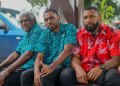
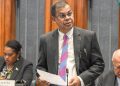
The Fiji Government has asked United States authorities to hand over any credible information or evidence behind Washington’s decision to sanction Chinese-Fijian businessman Zhao Fugang over allegations of significant corruption, according to The Australia Today. The outlet reported on 8 October that the US State Department had publicly designated Zhao, director of the Overseas Chinese Service Center in Fiji, accusing him of paying bribes to Fijian citizens to advance China-based government, business and criminal interests.
Key facts
- The public designation bars Zhao from entry into the United States.
- Fiji says allegations of unlawful conduct inside the country must go through Fijian legal and law enforcement processes.
- Fiji has asked relevant US authorities to pass credible information to Fijian counterparts for assessment and investigation where warranted.
- Zhao has rejected the allegations as false and misleading in a letter to the US Embassy in Suva, sent Thursday.
- Foreign Affairs Minister Sakiasi Ditoka told the ABC he had not been officially informed of the designation before the broadcaster contacted him.
- The designation is an administrative US action and is not, by itself, a criminal conviction.
Why it matters
The measure targets a Fijian citizen rather than a foreign official, and it was issued without any charge or court process in Fiji. Those two facts are what Suva’s request for evidence rests on: the Government accepts that the United States has acted, but says conduct alleged to have occurred on Fijian soil is for Fijian institutions to assess.
The US Embassy in Suva has tied the case to the Fiji economy, arguing that corruption undermines foreign investment and assistance, facilitates organised crime and weakens public confidence in government.
The request also lands weeks after Fiji’s anti-corruption agency closed its case against former deputy prime minister Biman Prasad — the most recent test of the same due-process argument the Government is now making to Washington.
What Fiji said
In a statement reported by The Australia Today, the Government reaffirmed its commitment to the rule of law and international cooperation while acknowledging the US decision.
“Any allegations of unlawful conduct within Fiji must be addressed through the appropriate Fijian legal and law enforcement processes,” the Government said.
It added that allegations do not constitute proof of wrongdoing, and that any action by Fijian authorities must uphold due process, the presumption of innocence and the rule of law. Fiji said it remained committed to working constructively with the United States and other international partners against transnational crime.
Zhao’s denial
In his letter to the US Embassy in Suva, Zhao categorically denied paying bribes, abusing a public position or engaging in corruption to advance the interests of China-based government, business or criminal actors.
“There are no ongoing criminal proceedings against me in Fiji,” the letter stated.
Zhao argued the US announcement made serious allegations without identifying the specific conduct involved. He asked the State Department to provide details of the alleged offences so he could submit a formal response, and sought the removal of the sanctions notice until he had been given that opportunity. His lawyers told the ABC earlier that they were unaware of the investigation and intended to seek clarification from the US Government.
A notification gap
Ditoka told the ABC that the normal process would involve formal notification to the Government through the Foreign Affairs Minister, and that he had not been officially informed before the broadcaster contacted him.
What the US Embassy said
In a statement posted on social media, the embassy said Zhao’s alleged activities had left Fiji vulnerable to what it described as “malign foreign influence” involving Chinese government, business and criminal actors.
Background to the allegations
The 60 Minutes investigation
Zhao has faced allegations in media and investigative reporting since 2024, when Nine Entertainment’s 60 Minutes and partner newspapers alleged he was a senior member of a transnational criminal network with links to the Chinese Communist Party’s United Front Work Department, a body described as seeking to advance Beijing’s interests overseas.
The OCCRP’s trafficking claims
The Organised Crime and Corruption Reporting Project, an investigative journalism network, alleged Zhao held a senior position in a network involved in drug smuggling, money laundering and human trafficking, and reported that his name had been included in the Australian Criminal Intelligence Commission’s Australian Priority Organisation Targets registry.
Those trafficking claims are what link the designation to Fiji’s own open drug files. Fiji Police have named six persons of interest in a missing-cocaine case, and enforcement agencies across the region are tracking transnational drug networks and their Pacific routes — the same trade the OCCRP places Zhao’s alleged network in. Neither Fijian matter names him.
Earlier responses
Fiji’s position in 2024
Then-prime minister Sitiveni Rabuka told the ABC in 2024 that he did not know whether Zhao worked as an operative for the Chinese Government, and said Zhao was entitled to the rights of a Fijian citizen.
Beijing’s position
The Chinese Embassy in Suva has also said Zhao is a Fijian citizen. The Australia Today notes he has appeared at events attended by Chinese officials, including ceremonies relating to police cooperation between Fiji and China.
Frequently Asked Questions
What is Section 7031(c), the law used to sanction Zhao Fugang?
Section 7031(c) is a provision of US appropriations law that allows the Secretary of State to designate foreign officials, either publicly or privately, where there is credible information of involvement in significant corruption or gross human rights violations, according to The Australia Today. The same provision covers immediate family members.
Does the designation also affect Zhao’s family?
Yes. The Australia Today reports that the designation makes Zhao and his immediate family members generally ineligible for entry into the United States.
What is the Overseas Chinese Service Center in Fiji?
Zhao is the centre’s director. The Australia Today reports that Fiji’s then-prime minister Frank Bainimarama and China’s then-ambassador to Fiji, Zhang Ping, attended a ceremony marking his appointment to the role about a decade ago. The Chinese Embassy in Suva has previously described the work of Chinese diaspora organisations in Fiji as transparent and above reproach.
Has Zhao Fugang been charged over the allegations?
No charges have been made public. Earlier coverage of the claims, relayed by The Australia Today, noted that authorities had not charged Zhao in Australia or elsewhere and had not publicly disclosed the evidence behind the allegations.