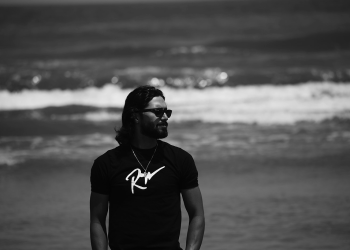
The Gold Coast wants to stop being known for its beaches. It is already known for something else: in April it was the most expensive place in Australia to rent, at a median $900 a week.
Councillors voted unanimously this month to endorse a strategy retiring the city’s “Glitter Strip” reputation and remarketing it as a film, study and business economy, according to a report published by the ABC on 26 September. Five months earlier, the Guardian reported that the same city had overtaken Sydney on median rents, with a vacancy rate near a record low of about 1 per cent, while council rangers closed tent cities and issued move-on orders to people sleeping rough.
What the council decided
The strategy comes from Brand Gold Coast, a council-owned organisation created to change how the city is seen by investors, students and overseas markets. Its head is the council’s marketing boss, Todd Babiak, who told the ABC he spent 200 hours interviewing locals about the city’s “core story”.
Babiak said that a generation ago the city sold itself as “really fun but also fairly cheap”, and that the laid-back cliché now sits awkwardly with residents who walk, surf or run early and then work hard all day. His commercial argument is that the beach image caps the city’s pull for serious business and investment: lucrative markets such as Vietnam, China and the United States, he told the ABC, hold only “a vague idea around beaches” about the place.
The replacement pitch rests on film. The ABC values the local industry at a gross $420 million and says the strategy uses it to present the Gold Coast as “a younger, more sophisticated, dynamic and complex economy”. The blockbusters shot there include Thor, Aquaman and Elvis.
The intellectual property problem
Producer Chris Amos, who spent two decades making documentaries in the UK — including Netflix’s Hating Peter Tatchell — before moving to the Gold Coast to build his own studio, told the ABC that international productions come for financial reasons and leave short-term work behind, while the intellectual property, and the merchandising and streaming revenue that flows from it, goes offshore.
Amos said many Australian films still need government incentives to attract private money, but that the city now has the capacity to make domestic films for international audiences, and that the talent drain “is starting to plug up a bit”. That is the argument in one line: servicing other people’s franchises pays wages, owning the franchise pays royalties. It is the same conversion problem Pacific screen-incentive schemes, Fiji’s included, have struggled with.
The bill that comes with the upgrade
Brand Gold Coast points to Austin, Texas, which the ABC says became a technology hub on the back of a “weird” reputation, home to Dell and now major offices for Apple, Google and Tesla. Joshua Long, the Southwestern University professor who wrote Weird City about that shift, told the ABC that Austin absorbs people the rest of Texas rejects — but also that gentrification pushed existing residents, particularly from African-American and Latino neighbourhoods, to the city’s fringe. Without protection for people displaced rather than helped by growth, he warned, “you’re going to have a divided city”. Austin has about 1 million residents; the ABC says the Gold Coast expects to reach that within 20 years.
On the Gold Coast, the displacement phase is already measurable. The ABC reports median house prices up more than 80 per cent since 2020, to $1.2 million. The Guardian’s $900 median rent sits on top of that.
The crackdown running alongside the rebrand
The Guardian reported in April that City of Gold Coast rangers were proactively patrolling homelessness hotspots, closing tent cities, issuing move-on orders and calling police, in what the council calls a “compliance-led” approach. A report to council said it had delivered “positive results”, including deterring homeless people from moving into the area, while conceding it had shifted people from one public space to another, with repeat action taken against the same individuals at new locations.
Mayor Tom Tate said publicly: “I’m happy to get them a bus and, if they want to, take them to Byron Bay to enjoy the lifestyle down there.” He later called the remark “tongue in cheek”, the Guardian reports. Maria Leebeeck, chair of the Gold Coast Homelessness Network, told the paper the cycle merely moves people between suburbs such as Nerang and Southport when the real task is housing them. From last May to the end of February the council logged 3,379 homelessness-related requests, an average of 338 a month, some duplicated.
The legal ceiling has already been set nearby: the Guardian reports that in March Queensland’s supreme court found the City of Moreton Bay had not treated homeless people “like humans” during an unlawful tent city clearance, and was obliged to move people on only after offering appropriate accommodation. Statewide, the Guardian reports 58,927 people on the social housing waiting list. Asked about affordability, Babiak told the ABC that if anyone solves it, it will be Gold Coasters.
Why Fijians in Queensland should track this
Neither the ABC nor the Guardian mentions Fiji. The link is in the official Australian and Fijian data, and it is worth stating only as far as that data goes.
Australia is one of the three main destinations for Fijian migration, with New Zealand and the United States. ABS census data records tens of thousands of Fiji-born residents nationally — around 80,000 at the 2021 count, with more again reporting Fijian ancestry — and New South Wales and Queensland as the two largest concentrations. In Queensland that weight sits in the Brisbane–Logan–Gold Coast corridor, the stretch this branding exercise covers and the area behind our earlier coverage of Fijian communities in Queensland. The Reserve Bank of Fiji’s statistics put personal remittance inflows above F$1 billion a year, with Australia among the top source countries.
Those are the two verified facts. Whether Gold Coast rents are reducing Australia-sourced remittances is not established by anything cited here, and nobody has published that measurement; the RBF’s monthly series, broken down by source country, is where it would surface. There is also a documented gap in coverage: Queensland social housing eligibility generally turns on residency status, so Fijians in the corridor on temporary work, graduate or student visas are unlikely to be among those 58,927 people waiting. Their fallback is a share house, an extended family household or a flight home — the same squeeze visible nationally in data showing half of young Australians now living in the family home.
One competitive note for Suva: a Gold Coast marketing itself on studios and business travel rather than sun is marginally less of a rival for the beach holiday Fiji sells, and marginally more of one for the students and skilled workers Fiji loses. Fiji’s arrivals figures and Australian visitor spending in Fiji are where that would show.
How we reported this
This article is based on the ABC’s 26 September report on the Brand Gold Coast strategy and the Guardian’s April report on rents and the council’s homelessness response; all quotes, Australian prices and council figures are attributed to those outlets. Diaspora and remittance figures are linked to the ABS and Reserve Bank of Fiji sources above and are presented as published official data, not as findings of the Australian reports. A paywalled Cairns Post item from May on the city’s new slogan was excluded because only its headline was readable. No Fijian resident of the Gold Coast, and no Fijian community organisation, is quoted here — a real limitation on a story pitched to a Fiji audience. We are seeking that testimony and will update this piece with it.
Frequently Asked Questions
What is Brand Gold Coast?
It is a council-owned marketing organisation, not a private agency. The ABC describes it as a City of Gold Coast body set up to reshape how the city is seen by investors, students and overseas markets, led by the council’s marketing boss, Todd Babiak. Its strategy was endorsed unanimously by councillors in September 2026, which means ratepayer money sits behind it and councillors can be asked about results.
What does a 1 per cent rental vacancy rate actually mean?
Vacancy rate is the share of rental properties sitting empty and advertised at a given time. Property industry convention treats roughly 3 per cent as a balanced market: below that, landlords set the terms. The Guardian reported the Gold Coast sitting near 1 per cent — about one in a hundred rentals available — alongside a median weekly rent of $900. For a newly arrived worker, that ratio matters more than the headline rent, because it decides whether anything can be secured at all.
What is a “compliance-led” approach to homelessness?
It is enforcement language, not housing language. In the Guardian’s reporting on the Gold Coast it covers proactive ranger patrols of known camping spots, closure of tent cities, move-on orders and police call-outs. It is distinct from “place-based” support models that pair outreach with accommodation offers. Queensland’s supreme court ruled in March that a council can only move people on after offering appropriate accommodation, which is the legal test any compliance-led program has to meet.
Can Fijians on temporary visas get social housing in Queensland?
Generally no. Queensland social housing eligibility turns on residency status, so people on temporary work, graduate or student visas are usually outside the system — which is why they would not appear on the 58,927-person waiting list the Guardian reports. Applicants and advocates should confirm current criteria with the Queensland Department of Housing directly, since eligibility rules and emergency accommodation subsidies are set by the state, not the council.
Where can I check how many Fiji-born people live in a specific Queensland area?
Use the Australian Bureau of Statistics rather than secondary summaries. The ABS QuickStats and community profile tools report country of birth and ancestry down to local government area and suburb level, so a Gold Coast City or Logan City figure can be pulled directly. Ancestry counts run higher than country-of-birth counts, because they include Australian-born children of migrants.
Where are the official numbers on remittances to Fiji?
The Reserve Bank of Fiji publishes personal remittance inflows in its economic and financial statistics, including monthly series and source-country breakdowns covering Australia, New Zealand and the United States. That is the dataset to check if you want to test whether Australian housing costs are cutting into money sent home; it reports what arrived, not why.