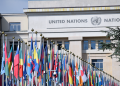
Billboards attacking fossil fuel advertising have gone up at a Fiji airport in a campaign created by the Australian agency Brains for Comms Declare, a climate communications charity, according to the advertising trade publication Campaign Brief, which reported the work on 24 September 2026. The report does not name the airport, and neither Comms Declare nor Brains had confirmed the location publicly at the time of writing – a gap that matters here, because Fiji’s two international gateways reach almost entirely different audiences.
Campaign Brief says the billboards land as Australia’s fossil fuel industry increases its advertising spend to persuade Australians that the sector is a force for good, putting that spend at $48.5 million in the first quarter of 2026. The publication does not state a currency; as an Australian trade title citing Standard Media Index data for the Australian market, the figures are Australian dollars. At recent rates of roughly F$1.45 to F$1.50 to the Australian dollar, A$48.5 million is in the order of F$70 million, and every conversion in this article uses that range.
Key facts
- The billboards are a Comms Declare campaign created by Brains, Campaign Brief reported on 24 September 2026. The airport is not named.
- Australia’s fossil fuel companies spent A$48.5 million on advertising in the first quarter of 2026, up nearly 7% on the same period in 2025, the publication says, citing Standard Media Index figures.
- More than A$1 million of that went to Facebook advertising alone over the 90 days to 1 May – roughly F$1.4 million to F$1.5 million – according to the same report.
- Campaign Brief reports that France has banned fossil fuel advertising nationally and that more than 60 jurisdictions have restricted it, naming Sydney, Amsterdam and Stockholm.
- Natural disasters cost the Australian economy an estimated A$38 billion a year on average, rising to at least A$73 billion by 2060 even in a low-emissions scenario, according to Deloitte Access Economics figures cited in the campaign.
- Fiji’s own exposure is documented separately: Fijian government post-disaster assessments put damage and losses from Tropical Cyclone Winston in February 2016 at about F$2.9 billion, close to a fifth of GDP that year.
- No fossil fuel company, industry body, Australian government representative or Fijian authority is quoted in the report.
Which airport – and why the choice matters
An airport placement is a targeting decision, not just a media buy, and in Fiji the two available airports buy two different audiences.
Nadi International Airport is where Fiji’s tourism economy physically meets its largest source market. Fiji Bureau of Statistics data show Fiji recorded roughly 980,000 visitor arrivals in 2024, a record, with Australia consistently the single largest source market at around 40 per cent of them, and the overwhelming majority of those arrivals land at Nadi. Nausori International Airport, outside Suva, carries mainly regional and domestic traffic, but it serves the seat of government, the diplomatic corps, the Pacific Islands Forum secretariat and the delegations that fly in for regional meetings.
So a Nadi buy is a message to Australian holidaymakers, delivered at the moment they land in a country whose coastline and cyclone seasons are the campaign’s argument. A Nausori buy is a message to the officials who negotiate climate finance. Campaign Brief does not name a media owner, the number of sites, the flight dates or the cost, so the scale of the buy – a single site or a full airport domination – is also unknown.
There is a commercial wrinkle worth naming. Fiji Airports Ltd, the state-owned operator of both international airports, earns advertising revenue from the terminals it runs. Whoever sold the space, a Fijian public entity ultimately sits on one side of the transaction, which is one reason the absence of any comment from Fiji Airports is a live question rather than a formality.
What is at stake for Fiji’s economy
The campaign is framed as an Australian industry argument, but the ground it is standing on is Fijian, and Fiji’s exposure to Australia runs through three channels at once.
Tourism. Tourism is Fiji’s largest foreign exchange earner. Reserve Bank of Fiji economic reviews and Bureau of Statistics releases have put annual visitor earnings at around F$3 billion in recent years, against a nominal economy of roughly F$12 billion – on this newsroom’s arithmetic, close to a quarter of GDP in gross earnings alone, before indirect activity in transport, agriculture, retail and construction is counted. That earning power is concentrated at one airport and leans on one market, which makes both the Australian dollar and Australian consumer sentiment operating variables for Fijian hotel, transport and hospitality employers, not abstractions.
Disaster costs. Where the campaign cites Deloitte Access Economics on Australian disaster costs, Fiji has harder numbers of its own. Beyond the F$2.9 billion Winston figure, the World Bank’s 2017 report Climate Vulnerability Assessment: Making Fiji Climate Resilient, prepared with the Fijian government, estimated that tropical cyclones and floods cost Fiji more than F$500 million a year on average – over 5 per cent of GDP at the time – and put the bill for building climate resilience at about F$9.3 billion over ten years, roughly a year of national output. Those are the numbers behind Fiji’s negotiating position, including Fiji’s Pre-COP31 preparations and the pledges of climate-resilience support for Fiji that partner governments have made without always attaching a dollar figure.
Remittances. Reserve Bank of Fiji data show personal remittance inflows above F$1 billion a year since 2022, an all-time high and equivalent to roughly a tenth of GDP, with Australia among the largest sources alongside New Zealand and the United States. That is the pipe through which Australian household cost pressure – the rising insurance premiums the campaign talks about, and the cost-of-living squeeze on young Australians documented in the HILDA survey – reaches Fijian households directly. When Australian disposable income tightens, arrivals and remittances feel it together.
The agencies’ argument
Imogen Dall, creative director at Brains, told Campaign Brief that advertising agencies are not neutral participants and that putting an agency name to a fossil fuel campaign helps promote greenwashing in its widest sense. “Ad agencies aren’t neutral,” she said, according to the publication.
Dall said the position is no longer a fringe one, and that a growing number of agencies have committed to Comms Declare’s pledge not to promote fossil fuels, in the same way many agencies stopped working with tobacco clients long ago. She compared fossil fuel advertising to cigarette, alcohol and gambling advertising, saying it harms human health and threatens survival, and that it needs to end now.
Comms Declare founder Belinda Noble said the Pacific needs big coal and gas exporters such as Australia to step up, and that halting fossil fuel advertising is an easy step Australia can take, Campaign Brief reports.
The side of the argument that is missing
Comms Declare is an advocacy organisation, and the billboards are campaigning material, not a neutral account of the energy debate. Campaign Brief carries no response from any fossil fuel producer, from Australian industry bodies such as Australian Energy Producers or the Minerals Council of Australia, or from the Australian government. Those bodies have argued publicly and consistently that coal and gas underpin export earnings, energy reliability and regional employment, and that lawful products may be lawfully advertised under Australia’s existing self-regulatory system, which handles complaints through Ad Standards. None of them has addressed this campaign on the record.
Nor is the commercial position of the media and agency industry itself represented. Agency holding companies and outdoor media owners earn fees from energy accounts, and a pledge that forgoes that revenue is a business decision as much as a moral one – a trade-off no party in the report is asked to quantify.
The spending figures in context
Campaign Brief attributes the advertising numbers to Standard Media Index, a firm that compiles booked media spend reported by major agency groups. Beyond the first-quarter total, the publication reports that more than A$1 million went to Facebook advertising alone over the 90 days to 1 May, or roughly F$1.4 million to F$1.5 million.
Two caveats belong on those numbers. Standard Media Index captures spend booked through participating agencies, so totals of this kind typically understate direct, in-house and smaller-platform buying rather than overstate it – the real figure is more likely higher than A$48.5 million than lower. And the report does not break the spending down by company, brand or medium beyond the Facebook line, so it is impossible to tell from it whether the increase is driven by a handful of large producers or spread across the sector.
For scale, A$48.5 million in a single quarter is in the order of F$70 million – larger than the annual marketing budget of most Pacific tourism boards, and a reminder that the argument Fiji is making at climate negotiations is being contested in Australia with resources no Pacific government can match.
What the campaign says climate delay costs
Dall said emissions from burning coal, oil and gas are driving warming that is already reshaping the Pacific, and cited UNDP figures indicating around half of Tuvalu’s capital, Funafuti, could be inundated by 2050. She said a leaders’ event will be held in Tuvalu alongside the Pre-COP.
She also said the industry that profits from delay is using advertising to persuade the public that the energy transition is too expensive, and pointed to the Deloitte Access Economics disaster-cost estimates. Insured losses from extreme weather have averaged around A$4.5 billion a year over the past five years and home insurance premiums have risen 51% in five years, she said, arguing Australians are already paying for climate change whether or not they accept the bill.
That insurance argument travels. Pacific insurers price cyclone risk off the same models, and Fijian businesses and households have faced hardening premiums and tighter cover for coastal property since Winston – the domestic version of the cost the campaign says Australians are quietly absorbing.
Where restrictions stand – and where Fiji sits
Momentum for advertising restrictions is building, Campaign Brief reports. It says France has banned fossil fuel advertising nationally and that Sydney, Amsterdam and Stockholm are among more than 60 jurisdictions that have restricted it.
Those claims line up with the public record. France’s Climate and Resilience Law, passed in 2021, introduced a prohibition on advertising for fossil energy products. Amsterdam moved in 2020 to bar fossil fuel and aviation advertising from parts of its public transport network, a step widely reported as a first for a city. The City of Sydney has adopted a policy restricting fossil fuel advertising and sponsorship on assets under its control, which covers council property rather than the whole Sydney metropolitan area – a distinction worth keeping in view whenever “Sydney” appears in a list of bans.
In August, a New South Wales parliamentary committee recommended the state government examine restrictions on fossil fuel advertising and sponsorship, according to Campaign Brief, which adds that UN Secretary-General Antonio Guterres has called on all governments to act. Guterres made that call explicitly in a June 2024 address on climate, urging countries to ban advertising from fossil fuel companies and asking media and technology firms to stop taking the money. Campaign Brief does not say whether the New South Wales government has responded to the committee, and no response had been published at the time of writing.
No Pacific government, Fiji included, has announced a comparable restriction. Pacific advocacy has run through emissions and finance instead, with Vanuatu and Tuvalu leading calls for a Fossil Fuel Non-Proliferation Treaty and Forum leaders pressing partners on coal and gas expansion. On advertising specifically, the billboards are an argument aimed across the Tasman rather than a signal of anything moving in Suva.
Unanswered questions and requests for comment
Beyond the site itself, Campaign Brief does not say how many billboards are involved, how long they will run, what the campaign cost, which media owner sold the space, or whether Fijian authorities were consulted or had any say in the creative.
No public statement on the campaign had been issued at the time of writing by Fiji Airports Ltd, which operates both Nadi and Nausori international airports, by Tourism Fiji, or by the Ministry of Tourism and Civil Aviation, and Campaign Brief records no comment from any of them. There is no reaction on record from Fiji’s government or from Pacific negotiators, and the report does not say whether Comms Declare plans similar placements elsewhere in the Pacific. This article will be updated if any of those parties comment.
What to watch next
- Confirmation from Comms Declare, Brains or the media owner of which airport and how many sites – the detail that determines whether this was aimed at tourists or at delegates.
- Any response from Fiji Airports Ltd, Tourism Fiji or the tourism ministry, given a Fijian state-owned operator’s terminals are carrying the message.
- Standard Media Index data for later quarters of 2026, which will show whether the A$48.5 million figure was a spike or a trend.
- Whether the New South Wales government acts on its committee’s recommendation, the nearest thing to a live legislative test in Australia.
- Whether fossil fuel advertising enters Pacific ministerial language in the run-up to the Pre-COP and the Tuvalu leaders’ event.
How this report was put together
The account of the campaign, the quotes from Imogen Dall and Belinda Noble, the Standard Media Index spend figures and the Deloitte Access Economics and UNDP estimates all come from the Campaign Brief report of 24 September 2026. At the time of writing this newsroom had found no Fiji-based coverage of the billboards – nothing from the Fiji Times, FBC News or Fiji Village – and no other outlet had reported them, so every claim about the campaign itself rests on a single trade publication and is attributed to it throughout.
The Fiji tourism, remittance, disaster-cost and climate-finance figures come from separate public sources – the Fiji Bureau of Statistics, the Reserve Bank of Fiji, Fijian government post-disaster assessments and the World Bank’s 2017 Climate Vulnerability Assessment with the Fijian government – and are used for context, not as confirmation of the campaign’s claims. The share-of-GDP comparison for visitor earnings is this newsroom’s calculation from those published figures. Currency conversions are approximate, based on recent Australian dollar to Fiji dollar rates. Where a fact could not be verified, including the identity of the airport, this article says so.
Frequently Asked Questions
Which Fiji airport are the billboards at?
Campaign Brief does not name it. Nadi International Airport handles the overwhelming majority of international arrivals, including nearly all services from Australia, so it is the likelier site for a campaign aimed at Australian travellers – but that is an inference, not a confirmed fact.
What currency are the $48.5 million and $1 million figures in?
Campaign Brief does not state a currency. Because it is an Australian trade publication citing Standard Media Index data for the Australian advertising market, the figures are Australian dollars. At recent exchange rates of roughly F$1.45 to F$1.50 to the Australian dollar, A$48.5 million works out in the order of F$70 million and A$1 million in the order of F$1.4 to F$1.5 million. Readers should check the prevailing rate, as the Australian dollar moves against the Fiji dollar.
Why does an Australian advertising row matter to Fiji’s economy?
Australia is Fiji’s largest single tourism source market, accounting for roughly 40 per cent of visitor arrivals according to Fiji Bureau of Statistics data, and almost all of those visitors arrive through Nadi. Australia is also a major source of the personal remittances the Reserve Bank of Fiji has recorded above F$1 billion a year since 2022, and it is the large coal and gas exporter that Pacific governments, including Fiji, have repeatedly pressed on emissions. Fiji’s disaster exposure is heavy: Fijian government post-disaster assessments put Tropical Cyclone Winston’s damage and losses in 2016 at about F$2.9 billion, close to a fifth of GDP that year.
What exactly are agencies being asked to sign?
According to Campaign Brief, Comms Declare runs a pledge under which agencies commit not to promote fossil fuels. Brains creative director Imogen Dall told the publication a growing number of agencies have signed it, in the same way many agencies stopped working with tobacco clients long ago. The pledge is voluntary and carries no legal force.
Which places have already restricted fossil fuel advertising?
Campaign Brief reports that France has banned fossil fuel advertising nationally and that more than 60 jurisdictions have restricted it, naming Sydney, Amsterdam and Stockholm. Those claims are consistent with the public record: France’s 2021 Climate and Resilience Law introduced a ban on advertising for fossil energy products, Amsterdam moved to bar fossil fuel advertising from parts of its public transport network in 2020, and the City of Sydney adopted a policy restricting fossil fuel advertising on assets it controls – council property, not the whole metropolitan area. UN Secretary-General Antonio Guterres called on governments to ban fossil fuel advertising in a June 2024 address on climate.
Does Fiji restrict fossil fuel advertising?
No. Neither Fiji nor any other Pacific island country has announced a ban or restriction on fossil fuel advertising, and no such measure is before Fiji’s Parliament as far as this newsroom can establish. Pacific climate diplomacy has instead focused on emissions and finance, with Vanuatu and Tuvalu leading calls for a Fossil Fuel Non-Proliferation Treaty. The billboards are therefore an argument aimed across the Tasman, not evidence of a policy shift in Suva.
Has anyone in Fiji responded to the campaign?
Not publicly, as far as this newsroom can establish. Campaign Brief records no comment from Fiji Airports Ltd, Tourism Fiji, the Ministry of Tourism and Civil Aviation or any Fijian government official, and no statement from those bodies had been published at the time of writing. No response from a fossil fuel company, industry body or the Australian government appears in the report either. This article will be updated if any of them comment.