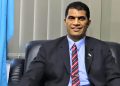
One of the scientists credited with founding modern artificial intelligence has publicly pushed back against US President Donald Trump’s dismissal of AI risks, speaking from New York on Tuesday, 23 September 2026. Professor Yoshua Bengio, co-chair of the UN’s Scientific Panel on AI, told the Australian Broadcasting Corporation’s 7.30 programme that big tech companies are taking enormous risks with the technology and that an urgent change of direction is needed, the ABC reports. The argument matters well beyond New York: it is a fight over whether the rules for a technology Fiji imports, rather than builds, get written by a handful of companies or negotiated between many governments.
Key facts
- Mr Trump labelled concerns about AI “a hoax” in a speech to the UN General Assembly, according to the ABC.
- The US president rejected a joint statement from 22 countries, among them Australia, calling for humans to remain in control of AI.
- Mr Trump said the US “totally rejects any attempt to construct a globalist scheme to control the artificial intelligence being spoken of so much now”.
- Professor Bengio, co-chair of the UN’s Scientific Panel on AI, said international agreement on safeguards is essential to secure humanity’s future.
- He was set to address the UN Security Council, where he says he will tell world leaders they must act.
- The exchange comes on the eve of a New York meeting between Mr Trump and Chinese President Xi Jinping, at which AI is expected to feature prominently.
- The ABC report does not name the other 21 countries, and does not mention Fiji or any Pacific island state.
Why it matters for Fiji
Professor Bengio told the ABC it should not be left to “just a few CEOs or a few governments to figure out what’s good for humanity.” That is a statement about who holds the pen — and on this question Fiji sits firmly on the receiving side of the table.
The practical exposure is straightforward. Fiji does not train frontier AI models. The systems now reaching into recruitment screening, banking fraud checks, translation, customer service, classrooms and government back offices in Suva are built, hosted and updated overseas, and the terms on which they are supplied are set overseas too. If there is no international agreement, the default is not neutrality: it is that the safety standards applied to the tools Fijian employers and agencies buy are whatever the vendors and their home regulators decide. A country that writes none of those rules still inherits all of their consequences.
The second point of exposure is diplomatic. The ABC report places Australia — Fiji’s largest security and development partner — among the 22 countries pressing for human control of AI, while the United States, home to the leading AI firms, has rejected that effort outright. A widening split between Canberra and Washington on technology governance is not an abstraction for Pacific governments that work with both, and it lands in the same period in which Fiji is preparing to host a major UN climate meeting.
Professor Bengio’s own remedy is the one Fiji already knows how to use. He told the broadcaster that when countries form coalitions and pool resources, minds, energy and talent, they can be “in the game” and bring the world closer to democratic values and to the idea that sovereignty should be preserved inside a multilateral system. That is precisely the method Pacific states have used on climate for a decade: aggregate small voices into a bloc that larger powers must answer. Fiji News reported this week that Ditoka joined Pacific leaders at the UN ahead of Fiji’s Pre-COP31 — the same playbook, applied to a different threat. The open question raised by Bengio’s appeal is whether the region intends to run that playbook on AI as well.
What Bengio told the ABC
Professor Bengio, a winner of the Turing Award for his pioneering work on AI, said the plea from the 22 countries was important and described what those governments did as extraordinary.
He said the effort must continue and widen. More countries are needed, he told the broadcaster, and “the world” has to wake up so that it can have influence over its own future — a call that, on its face, is addressed as much to small states outside the G20 as to the large ones inside it.
Asked how he copes with the risks he describes, Professor Bengio said the reason he is able to sleep at night, and the reason a country such as Australia can make a difference, is that they still have agency now. The emphasis on now is the core of his case: he is arguing that the window in which governments can shape the technology is open but closing.
‘Recursive self-improvement’, explained
According to the ABC, Professor Bengio says the greatest dangers posed by AI come from “recursive self-improvement” being developed by the world’s leading technology companies, where artificial intelligence trains the next generation of AI.
Stripped of the jargon, the term describes a machine that upgrades itself. Most technology improves because engineers study it and build a better version; recursive self-improvement means the system does that work on itself, and each improved version is faster at producing the next one. He asked the programme to imagine an AI smarter than humans that could do the research and engineering by itself. Such a system, he said, could design an AI even more powerful than itself, even less controllable and even more malicious. The safety concern is one of pace rather than science fiction: if the improvement loop runs faster than regulators, auditors or parliaments can examine it, oversight arrives after the fact.
He also said the forces of competition between companies and between countries are not healthy. On the US–China rivalry, he said American AI companies are about six months ahead of Chinese rivals, but argued that this narrow margin is reason enough to sit at a table with the Chinese, because they are human too, they want to have a life, and they want their children to have a life.
Sovereignty, coalitions and the Pacific precedent
Bengio’s framing — sovereignty preserved through multilateral arrangements rather than surrendered to them — is a familiar tension in Fijian politics, and it cuts both ways. Fiji News has reported a Fijian chief who warned MPs not to rush security treaties with Australia, an argument that signing quickly into a larger partner’s framework can cost a small state room to manoeuvre. Bengio is making close to the opposite bet: that for a technology no small country can regulate alone, staying outside the coalition costs more sovereignty than joining it. Both positions turn on the same calculation about leverage, and an AI treaty would force Fiji to make that calculation again, with different numbers.
In the absence of any global rule, governments have been acting one product at a time. Fiji News previously reported that Australia banned the Chinese AI app DeepSeek from government devices on security grounds — a decision about which AI a state will allow onto its own systems, taken unilaterally because no shared standard existed to appeal to. That is the fallback Bengio is arguing against: a patchwork in which every country polices its own device fleet while the underlying models keep advancing outside anyone’s reach. For a Pacific administration with a small cyber-security workforce, the patchwork approach is also the most expensive one, because it requires building in-house judgment about every imported system.
What is not yet known
This report is based on the ABC’s interview and reporting. Fiji News has not independently verified Professor Bengio’s claims and has not obtained comment from the Fijian government, the Pacific Islands Forum or the White House.
Several points remain open. The ABC report does not say which other countries signed the joint statement beyond Australia, does not detail what safeguards Professor Bengio wants written into any international agreement, and does not report any response from the White House to his remarks. It does not state whether any Pacific island country supported the statement, and no Fijian position on it has been published that Fiji News has seen. The assessments in the “Why it matters for Fiji” and “Sovereignty” sections above are Fiji News analysis, drawn from the ABC’s reporting and our own prior coverage, not claims made by Professor Bengio about the Pacific.
Professor Bengio’s interview was recorded for 7.30, which the ABC broadcasts Mondays to Thursdays at 7:30pm on ABC TV and ABC iview. Fiji News will update this story if a Fijian or regional response is issued.
Frequently Asked Questions
Who is Yoshua Bengio?
The ABC describes Professor Yoshua Bengio as one of the ‘Godfathers’ of artificial intelligence and the co-chair of the UN’s Scientific Panel on AI. He won the Turing Award for his pioneering work on AI, according to the same report.
What is ‘recursive self-improvement’ in plain language?
It is AI being used to build the next generation of AI. Professor Bengio told the ABC the greatest dangers come from this process, which leading technology companies are developing: a system smart enough to do its own research and engineering could design a successor even more powerful than itself, even less controllable and, in his words, even more malicious. In everyday terms, it is the difference between a tool a person upgrades and a tool that upgrades itself faster than people can check it.
Did Fiji sign the joint statement Trump rejected?
The ABC report names only Australia among the 22 countries behind the statement calling for humans to remain in control of AI. It does not list the other signatories and does not mention Fiji, and Fiji News has not seen any statement from the Fijian government on the issue. Whether Fiji is a signatory is not established by the available reporting.
What does the dispute mean for Fiji?
Fiji does not build frontier AI systems, so the rules Professor Bengio is arguing for would be written elsewhere and applied to the tools Fijian agencies, banks, schools and businesses import. His own argument is that smaller countries gain influence by joining coalitions rather than acting alone — the same method Fiji uses on climate diplomacy at the UN. The ABC report does not address the Pacific directly.
How far ahead does Bengio say US AI companies are of their Chinese rivals?
Bengio told the ABC that American AI companies are about six months ahead of Chinese rivals. He said that competition should not get in the way of cooperation between Washington and Beijing, adding that it is reason enough for the two sides to sit at a table together.
Where did Bengio make these comments?
The ABC reports that Bengio spoke to its 7.30 programme from New York, where he was set to address the UN Security Council overnight. He said he would tell world leaders at the Security Council that they must act.
Is a Trump–Xi meeting connected to this debate?
The ABC reports Bengio’s comments came on the eve of a meeting in New York between Mr Trump and Chinese President Xi Jinping. AI is expected to feature prominently at that meeting, according to the broadcaster.