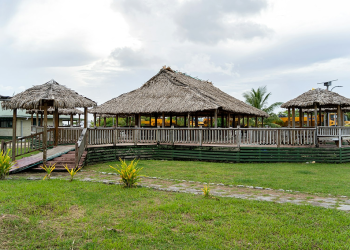
A fishing village of 147 people on Fiji’s west coast has helped bring nearly 10 kilometres of bleached coral coastline back to life, according to Xinhua, which profiled the village of Naidiri on 11 October. The Chinese state news agency is the only outlet to have published an account of the project, and the detail below rests on its reporting.
The timing is not accidental. Naidiri surfaced in international coverage in the same week Fiji launched its first National Action Plan for Coral Reef Conservation 2026-2031, unveiled at a ministerial preparatory meeting for the 31st Conference of the Parties (COP31) of the UN Framework Convention on Climate Change, while Pacific ministers and leaders gathered in Fiji for the Pre-COP31 round of meetings.
Why it matters
Permanent Secretary for Environment and Climate Change Sivendra Michael said Fiji’s coral reefs span more than 6,000 square kilometres and that they sustain island livelihoods, support marine biodiversity and shield coastlines from storm surges. All three of those functions failed at Naidiri once the corals died: Xinhua reports that fish stocks plunged and the weakened reef offered less protection against surges, to the point where village elders warned the community could disappear within decades.
How the bleaching started
Naidiri’s fishers first noticed sea temperatures rising in the 1990s, villager Joseva told Xinhua. Roughly a decade ago a powerful El Niño event combined with global warming triggered severe mass bleaching along the coast, and more than 70 percent of nearby corals bleached within months. Joseva described the result as an underwater graveyard.
That chronology fits the independently documented record. The US National Oceanic and Atmospheric Administration tracked a global bleaching event from 2014 to 2017, the longest and most widespread on record, which struck reefs across the South Pacific during a strong El Niño. The Global Coral Reef Monitoring Network’s status report attributed the single largest recorded loss of the world’s coral to that event. El Niño conditions have been linked to food and water stress elsewhere in the region as well.
What the villagers did
In early 2020 fishers, elders and young volunteers formed a community restoration team. Members set up coral nurseries in sheltered waters, collected surviving corals they considered potentially heat-tolerant, cut them into fragments and transplanted the fragments onto damaged reef.
Several times a week they took boats offshore to tend the corals, working against strong currents, algae growth and unpredictable weather. “This is a struggle measured in years, against currents and an unpredictable climate,” project leader Manoa Duwai, a Naidiri villager, told Xinhua.
The work was divided across the village. Duwai said women recorded water temperatures and coral growth, elders contributed traditional marine knowledge, and younger residents carried out the underwater restoration itself.
A setback, then recovery
A brief marine heatwave in late 2021 caused renewed bleaching and wiped out much of the team’s progress. The villagers kept going. By 2023 corals were surviving in the nurseries and butterflyfish, damselfish and groupers had returned to the restoration areas, Xinhua reports, and villagers said storm impacts eased and local fish catches gradually improved.
What the evidence does and does not show
Villagers told Xinhua that an underwater survey in 2025 found live coral cover back at a healthy level. That finding is villager-reported: Xinhua named no research institution, survey method or baseline, and no peer-reviewed study of the Naidiri site has been published. The improvement in catches and the easing of storm damage are likewise the community’s own observation rather than measured results.
The underlying mechanism is well established even if the local numbers are not. A widely cited 2014 analysis in Nature Communications found that healthy reef crests dissipate an average of about 97 percent of incoming wave energy, which is why losing a reef exposes a shoreline and why rebuilding structure can reduce wave impact. What has not been measured at Naidiri is how much structure has actually returned, and over what area.
The money question
Reef condition is an economic variable in Fiji, not only an environmental one. Tourism is the country’s largest industry and biggest earner of foreign exchange, and diving, snorkelling and coastal resorts depend directly on reef condition, while inshore reef fisheries supply much of the protein and cash income in coastal villages such as Naidiri.
Yet the new plan arrived without a price attached. Xinhua published no budget, funding source, implementation timeline beyond the 2026-2031 span, or enforcement mechanism for it, and no valuation of the reef-dependent income it is meant to defend. By contrast, Fiji also used the Pre-COP31 platform to launch an FJD$5.2m carbon market plan — the only costed climate instrument the government put forward during the meetings. Until the coral plan is costed, how much of it reaches villages doing the work is an open question.
Recognition abroad
In November 2025 the Naidiri Marine Biodiversity Park, established by local villagers, received the 2nd OceanLove Innovation Award at the Blue Economy World Congress, according to Xinhua. Duwai has since presented the village’s experience in Australia, Canada, Sweden and South Africa.
Inia Seruiratu, the Pacific Ocean Envoy for COP31, framed Naidiri as an answer to slower-moving debates elsewhere, telling Xinhua that while many places are still arguing over the costs of action, Pacific islanders have long been diving beneath the waves and writing the most vivid answers to global climate governance.
Frequently Asked Questions
What causes coral bleaching, and can bleached coral recover?
Corals live with symbiotic algae that supply most of their food and their colour. When water stays unusually warm, the coral expels those algae and turns white. A bleached coral is stressed, not automatically dead: if temperatures fall quickly it can take the algae back, but if the heat persists it starves and dies, leaving the skeleton to be overgrown by algae.
How does coral fragment transplanting work, and how long does it take?
Branching corals can be broken into small pieces that grow into new colonies, so restoration teams raise fragments on frames or lines in calmer water before fixing them to damaged reef. Published restoration studies generally cover small areas and report widely varying survival rates, and results are usually measured over a few years rather than decades. The technique also does nothing about the heat that causes bleaching in the first place, which is why reef scientists treat it as a supplement to emissions cuts rather than a substitute.
How much of Fiji’s reef system does 10km represent?
The two public figures are not directly comparable. Xinhua describes Naidiri’s work in kilometres of coastline, while the environment ministry’s 6,000-plus square kilometres is a measure of reef area, so no percentage can be calculated from them. Xinhua did not publish the width or area of the restored stretch.
Is village-run marine management common in Fiji?
Yes. Fiji has a long-established network of locally managed marine areas in which villages close parts of their customary fishing grounds, or qoliqoli, to let stocks recover, usually with support from government agencies and NGOs. Xinhua did not say whether the Naidiri Marine Biodiversity Park is formally registered within that network or managed independently by the village.