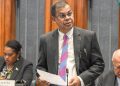
Fiji’s Director of Environment, Senimili Nakora, has tied the country’s National Action Plan for Coral Reef Conservation 2026 to 2031 to the Pacific’s negotiating agenda for COP31, FBC News reported on 15 October 2026. Nakora said the plan connects to each of the four pillars the region put forward at pre-COP31 this week: keeping 1.5 degrees Celsius within reach, access to climate finance, elevating the ocean-climate nexus and amplifying Pacific voices.
Key facts
- The plan contains 82 actions across seven strategic areas, FBC News reported, naming four of them: sustainable fisheries, community empowerment, ecosystem restoration and sustainable financing.
- Nakora said it contributes to the Kunming-Montreal Global Biodiversity Framework, the UN biodiversity deal, and its target of conserving 30 percent of land and marine areas by 2030.
- The Permanent Secretary for Environment said the plan is backed by legal reform work, citing EMA amendments, the Endangered Protected Species Act and amendments to the Fisheries Act that now recognise coral and strengthen enforcement.
- The plan also supports the Pacific Coral Reef Action Plan, according to FBC News.
- COP31 takes place this November in Antalya, Türkiye, SBS reports.
Why it matters
Nakora said the plan prioritises sustainable financing because of the role reefs play in climate adaptation, coastal protection, food security and biodiversity, FBC News reported. She framed the national strategy and the global negotiation as inseparable.
“Reef survival depends on 1.5 degrees and the plan builds resilience alongside strong global ambition,” Nakora said, according to FBC News.
SBS reports that Pacific countries are already living with the consequences. Fiji’s Hon. Inia B Seruiratu, the Pacific Envoy for the Ocean, told SBS that sea level rise threatens communities, infrastructure, fresh water supplies and food security, and that the long-term effect is the habitability of entire nations. He said Fiji is relocating coastal communities and that this comes with a cost.
What the plan covers
Beyond the strategic areas, the Permanent Secretary for Environment said the strategy will steer conservation work toward priority climate-resilient reefs while also tackling mangrove degradation and marine pollution, FBC News reported. Fiji’s reefs are already under pressure, as earlier reporting on this site has set out.
Nakora said the plan places Pacific communities and traditional knowledge at the centre of its development, according to FBC News.
The Pacific’s COP31 agenda
SBS reports that three Pacific Climate Envoys have been appointed to carry the region’s priorities to COP31, focusing on keeping the 1.5°C goal within reach, improving access to climate finance and putting the ocean at the centre of global climate action. Fiji has pushed to put the ocean at the centre of COP31 through Seruiratu, who told SBS there cannot be a successful climate solution without oceans.
On finance, SBS reports that Ruel Yamuna of Papua New Guinea, the Pacific COP31 Envoy for Access to Climate Finance, said the focus cannot be only on announcing new commitments but on ensuring money reaches communities in a way that works for Pacific countries. He told SBS that adaptation must receive the same level of attention as mitigation, calling it an existential necessity for the region rather than an option.
Background
COP is the annual conference of the parties to the UN Framework Convention on Climate Change, SBS reports, a process that produced the Paris Agreement at COP21 in 2015, under which countries committed to holding warming well below 2°C while pursuing efforts to limit it to 1.5°C. Ahead of Antalya, the region hosted the Pacific pre-COP31 leaders’ meeting, in a statement issued in Suva, the European Union Delegation said, with EU Ambassador to the Pacific Barbara Plinkert calling climate change an existential threat to the region.
Fiji hopes the reef plan will strengthen national protection while supporting the Pacific’s push for stronger ocean and climate commitments at COP31, FBC News reported.
Frequently Asked Questions
Has FBC News published all seven strategic areas in Fiji’s coral reef plan?
No. FBC News reported that the plan holds 82 actions across seven strategic areas but identified only four of them — sustainable fisheries, community empowerment, ecosystem restoration and sustainable financing. The remaining three were not named, and the outlet did not publish a breakdown of costs or funding sources for the 82 actions.
What are the Pacific’s four COP31 pillars Nakora referenced?
As quoted by FBC News, they are keeping 1.5 degrees Celsius within reach, access to climate finance, elevating the ocean-climate nexus and amplifying Pacific voices. The two available accounts count the region’s asks differently: SBS describes three priorities carried by the Pacific Climate Envoys, which match Nakora’s first three, with the amplification of Pacific voices appearing as a fourth pillar in her account.
Where and when is COP31 being held, and who is presiding?
SBS reports that COP31 takes place this November in Antalya, Türkiye, with Australia serving as President of Negotiations under the COP31 Türkiye-Australia partnership. The European Union Delegation, which also confirms Australia’s role, said the Pacific’s pre-COP31 leaders’ meetings were held in Fiji and Tuvalu from 5 to 8 October 2026.
What is the Pacific Coral Reef Action Plan that Fiji’s plan supports?
FBC News reported that the national plan contributes to the Pacific Coral Reef Action Plan but did not publish targets, timelines or figures for that regional framework, so the scale of the commitment Fiji is aligning with is not set out in the reporting available.