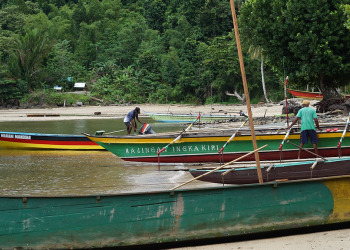
Fiji’s Ministry of Environment says the country’s coral reefs — more than 6,000 square kilometres of them — are central to food security, fisheries and tourism, and are now under growing pressure from fishing, pollution and habitat loss. Permanent Secretary for Environment Dr Sivendra Michael and Director of Environment Senimili Nakora set out the warning as the Ministry outlined a National Action Plan for Coral Reef Conservation, FBC News reported on 13 October 2026.
Key facts
- Fiji’s reefs cover more than 6,000 square kilometres, according to Dr Michael, and protect coastal communities as well as supporting fisheries.
- The Ministry identified three major local threats: unsustainable fishing, pollution, and the destruction and degradation of coastal habitats, with climate change named as the main global threat.
- The National Action Plan for Coral Reef Conservation will prioritise climate-resilient reefs, sustainable fisheries, mangrove restoration and pollution control, FBC News reports.
- Dr Michael says protection requires coordinated work between government, conservation partners and traditional fishing-ground custodians.
Why it matters
Dr Michael tied the reefs directly to the national accounts. “They feed our families and sustain our fisheries. They protect our shorelines and underpin a tourism sector that contributes significantly to our GDP,” he said, in remarks carried by FBC News. Tourism’s reliance on the reef economy sits alongside its reliance on the national carrier, which Parliament was told carries about 70 per cent of visitors.
He also cautioned against assuming the reefs will keep bouncing back. The reefs “have also shown us what resilience looks like”, he said, but added that resilience “is not something we can also take for granted” while reefs face unsustainable fishing, land-based pollution and the loss of mangroves and coastal habitats on top of a warming ocean. He described the approach as a “reach to the reef” concept, built by reducing those pressures together rather than in silos.
How the threats were identified
Nakora said the Ministry pulled together different perspectives and evidence to pinpoint the key pressures on Fiji’s reefs, producing the three local threats plus climate change. She said those pressures, combined with climate change, are threatening the health and resilience of Fiji’s marine ecosystems, FBC News reports. The Ministry has not, in that report, attached a budget or timeline to the action plan.
The wider economic case
The link between reef health and economic stability is also being made by central bankers. Economists from the European Central Bank — Andrej Ceglar, Irene Heemskerk and John Hutchinson — argued in a blog that healthy oceans are vital for economic stability, according to the Cyprus Mail. They put the ocean economy at up to 5 per cent of global services and products, covering fisheries, tourism and coastal industries.
That economy has doubled over the past 25 years to roughly €2.3 trillion, with most of the growth recorded in Asia and the Pacific, the Cyprus Mail reports. The ECB authors also noted that 65 per cent of the global economy sits within 100 kilometres of a coastline, and that around 10 per cent of marine species are at risk of extinction.
On reefs specifically, they said about 80 per cent of the world’s coral reefs have been exposed to bleaching-level heat stress since 2023 — the largest global bleaching event on record — and that reef deterioration reduces the protection reefs give coastlines, raising risks to coastal communities and infrastructure. They wrote that protecting oceans “is not just an environmental goal – it is an economic necessity”.
Mangroves and reefs together
The Ministry’s inclusion of mangrove restoration matches recent research. UConn researcher Mojtaba Fakhraee argues in a Nature Sustainability paper that strategically placing blue carbon ecosystems — mangroves, seagrasses and salt marshes — next to reefs can store carbon and help restore the reefs themselves, Phys.org reports.
Fakhraee says those ecosystems can raise local water pH as they capture carbon, countering the acidification that kills coral; enhance the cycling of nutrients corals need; dissipate wave energy; and stabilise sediments that would otherwise cloud the water. “Restoring blue carbon ecosystems is for more than just carbon storage. It can also help bring coral reefs back to life,” he told Phys.org. In Fiji, village-level work of this kind is already visible in Naidiri’s reef restoration work.
Financing: what other reef states are doing
Fiji is not alone in pairing reef protection with an economic pitch. Egypt launched the Egyptian Red Sea Initiative in June 2026, a national programme covering reef protection, climate resilience and sustainable tourism, unveiled by Minister of Local Development and Environment Manal Awad, according to Daily News Egypt.
That programme runs with the United Nations Development Programme in Egypt and support from the Global Fund for Coral Reefs, and includes plans for an Egyptian Coral Reef Fund as a long-term financing mechanism. “Long-term sustainable financing is the real guarantee for effective conservation,” Awad said. Fiji’s own climate financing push has run along a different track, through its FJD$5.2m carbon market plan presented at the Pre-COP31 meetings. The sources do not say whether the reef action plan will carry a dedicated fund.
Frequently Asked Questions
Has there been any recent international agreement on protecting marine areas?
Yes. The Cyprus Mail, reporting the ECB economists’ blog, says the UN High Seas Treaty entered into force on 17 January 2026 after reaching the 60-country ratification threshold. The treaty is intended to allow marine protected areas covering 30 per cent of international waters, against about 1 per cent protected now.
How much carbon and heat have the oceans absorbed?
According to the ECB economists cited by the Cyprus Mail, oceans have taken up roughly one-third of human carbon dioxide emissions since the Industrial Revolution and more than 90 per cent of the excess heat from greenhouse gases. They add that 2024 was the hottest year on record for global oceans, and warn oceans could eventually shift from a carbon sink to a carbon source.
What are the projected costs of sea level rise?
The Cyprus Mail reports the ECB blog as saying sea levels have risen about 21 centimetres since 1900, with the annual rate more than doubling from about 1.7mm to over 3.7mm. Without adaptation, rising seas could cost the EU up to €500 billion a year in lost coastal services by 2080, and the authors say scenarios above two metres of rise by 2100 cannot be ruled out.
Could carbon credits pay for reef restoration?
UConn researcher Mojtaba Fakhraee argues in Nature Sustainability that co-locating blue carbon ecosystems with reefs could let carbon capture credits fund reef restoration, Phys.org reports. He says credit and trading networks for such projects still need to be established, and that more research is needed on how much carbon the systems store and for how long.