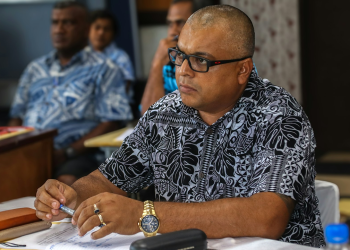
Fiji Sign Language should be formally recognised as an official language, and the Ministry of Social Protection says it will work with the Fiji Association of the Deaf on the request, FBC News reported on 24 September 2026. The push is being made during International Week of Deaf People.
One caveat frames everything that follows: FBC attributes the commitment to the Ministry as an institution and quotes no minister, ministry official or Association representative by name. There is, at this stage, no on-the-record voice behind the request — and no bill, date or legal mechanism attached to it.
Key facts
- Who: the Ministry of Social Protection and the Fiji Association of the Deaf, per FBC News.
- What: a push for Fiji Sign Language to be formally recognised as an official language of Fiji.
- When: reported 24 September 2026, during International Week of Deaf People.
- On the record: nobody. FBC names no minister, official or Association spokesperson.
- The stated problem: Deaf people continue to face barriers in “education, healthcare, employment and access to essential information,” in the report’s terms, with those barriers described as sharper outside Suva.
- The stated fix: institutions and service providers should communicate using Fiji Sign Language, captions and “other accessible methods.”
- Existing support: the Ministry funds the Gospel School for the Deaf through grants covering hostel operations and Early Childhood Education initiatives, according to FBC. No value or duration is published.
- Legal baseline: English, iTaukei and Fiji Hindi are the official languages, given equal status by the 2013 Constitution.
What recognition would add to the law
Fiji Sign Language would be the first signed language on a list that currently holds three spoken ones — and a visual language carries a different set of obligations. Recognition implies qualified interpreters, captioning, visual signage and accessible emergency broadcasting, not translated text alone.
It would also not be Fiji’s first move in this area. Fiji ratified the UN Convention on the Rights of Persons with Disabilities in 2017, and the treaty is explicit about signed languages. Article 2 states that “‘Language’ includes spoken and signed languages and other forms of non-spoken languages.” Article 21 requires states to accept and facilitate “the use of sign languages, Braille, augmentative and alternative communication, and all other accessible means, modes and formats of communication” in official interactions. Article 24(3)(b) commits states to “facilitating the learning of sign language and the promotion of the linguistic identity of the deaf community.”
Fiji passed a Rights of Persons with Disabilities Act in 2018. Against that record, the request is essentially to convert commitments made nearly a decade ago into named status for the language itself.
FBC’s report does not say whether that would take legislation, a constitutional amendment, a Cabinet decision or a ministerial declaration. The distinction is not academic: a Cabinet decision can be undone by the next Cabinet, while statutory or constitutional recognition cannot.
Why it matters
The four barrier areas the Government names are the everyday services most Fijians deal with — and the Government’s own position, as FBC reports it, is that Deaf people are still shut out of them.
On that framing, the request is less a symbolic language question than a service-delivery one. Official status is the lever for interpreter provision, captioning and staff training across schools, hospitals, workplaces and public communications.
Emergency public health messaging is a live test of the last of those. Fiji News has reported on the Government’s declaration of an HIV emergency, a response that depends on information reaching people quickly and accurately. It runs through the same “essential information” channel FBC identifies as a barrier for Deaf Fijians — the point at which a missing caption or interpreter stops being an inconvenience and starts affecting a health outcome.
The gap outside Suva
FBC singles out access beyond the capital as the sharpest problem, but names no particular towns, provinces or maritime areas. The report carries no Fiji-specific count of Deaf or hard-of-hearing people and no urban–rural service comparison.
For scale, from public records rather than the report:
- The World Health Organization estimates more than 1.5 billion people globally live with some degree of hearing loss, about 430 million of them with disabling hearing loss.
- WHO says that burden falls most heavily on low- and middle-income countries.
- Fiji’s roughly 900,000 people are spread across more than 100 inhabited islands — the structural reason interpreter coverage is harder to deliver beyond Suva, Nadi and Lautoka.
A published national estimate, and a map of where interpreters actually work, would be the first sign that recognition is being planned rather than announced.
What the Government is asking of institutions
Beyond status for the language, the report says government institutions and service providers need to improve how they communicate with Deaf people, naming Fiji Sign Language, captions and “other accessible methods” — a third category left undefined.
The Government also says the lived experiences of Deaf people must shape the policies and services affecting them. Whether that becomes a standing mechanism — a working group with Deaf members, terms of reference and a reporting line into the Ministry — or stays a statement of intent is the test.
The wider appeal is softer still. FBC reports the Government is encouraging ministries, local authorities, businesses and community organisations to build Deaf accessibility into planning and service delivery. On the report’s wording, that is an appeal with no requirement or penalty attached.
A ministry with a full caseload
The file lands with a ministry that already carries much of Fiji’s welfare and protection workload. Fiji News has separately reported on a national committee revived amid a spike in child abuse cases — another social protection commitment drawing on the same pool of officers, coordination capacity and budget lines.
FBC’s report points to no additional staffing or funding for the sign language work, which leaves open who inside the Ministry owns it.
The international backdrop
The timing is deliberate. International Week of Deaf People is coordinated by the World Federation of the Deaf and falls in the last full week of September, taking in the International Day of Sign Languages on 23 September — proclaimed by the UN General Assembly in 2017 and first marked in 2018.
The federation puts the global Deaf population at around 70 million people using more than 300 distinct sign languages, and has campaigned for national sign languages to be given legal recognition rather than treated as a welfare accommodation. New Zealand Sign Language has been an official language of New Zealand by statute since 2006 — a precedent in which recognition arrived attached to interpreter funding and reporting duties.
What to watch
- Someone on the record. A minister or Association representative putting a name to the commitment.
- A named process after the week ends. A formal joint process with a lead official, terms of reference and a date, once International Week of Deaf People is over.
- The legal route. Whether the Government signals legislation, a constitutional amendment or a Cabinet decision, and whether anything is scheduled before Parliament.
- The Association’s detailed ask. Interpreter qualification standards, interpreter numbers in schools, hospitals and courts, and captioning obligations on broadcasters and agencies.
- Numbers. A national estimate of Deaf and hard-of-hearing Fijians, and a figure for the Gospel School for the Deaf grants.
- Uptake. The first agency or business to publish an accessibility commitment in response would be the first measurable result of the appeal.
Reporting note
The Fiji-specific developments here — the recognition request, the Ministry’s commitment to work with the Fiji Association of the Deaf, the barriers described and the Gospel School for the Deaf grants — are reported by FBC News and attributed to that broadcaster throughout. Short phrases in quotation marks attributed to the report are its own terms. No quotation from a named individual appears in this article because FBC’s report contains none.
Legal, treaty and international context is drawn from public records: Fiji’s 2013 Constitution, the UN Convention on the Rights of Persons with Disabilities, the Rights of Persons with Disabilities Act 2018, World Health Organization hearing-loss estimates and World Federation of the Deaf material. This article will be updated if the Ministry, the Association or other outlets publish further detail.
Frequently Asked Questions
What are Fiji’s official languages at the moment?
Under the 2013 Constitution, English, iTaukei (Fijian) and Fiji Hindi are Fiji’s official languages and have equal status. If the request FBC News reports were granted, Fiji Sign Language would become the first signed language on that list.
Has any minister or official spoken on the record about the push?
Not in the report this article is based on. FBC News attributes the commitment to the Ministry of Social Protection as an institution and quotes no minister, ministry official or Fiji Association of the Deaf representative by name. Until someone speaks on the record, the political weight behind the request — a ministerial position, a Cabinet paper, or support at official level — cannot be established from the reporting.
Has a timeline, law or funding figure been announced for recognition?
No. The FBC News report names no date, bill or legal mechanism for recognising Fiji Sign Language, and gives no FJD figure for the grants it mentions. It says only that the Ministry of Social Protection will work with the Fiji Association of the Deaf on the request.
Does Fiji already have obligations relating to sign language?
Yes, at treaty level. Fiji ratified the UN Convention on the Rights of Persons with Disabilities in 2017. Article 2 of that convention states that “‘Language’ includes spoken and signed languages and other forms of non-spoken languages,” and Article 24(3)(b) commits states to “facilitating the learning of sign language and the promotion of the linguistic identity of the deaf community.” Fiji also passed a Rights of Persons with Disabilities Act in 2018. Domestic recognition of Fiji Sign Language as an official language would be an additional step on top of those commitments.
Does the Ministry already fund any school for Deaf students in Fiji?
Yes. The Ministry of Social Protection supports the Gospel School for the Deaf through grants, according to FBC News, including funding for hostel operations and Early Childhood Education initiatives. FBC does not publish a value or duration for that support.
What is the Government asking businesses and local authorities to do?
FBC News reports the Government is encouraging ministries, local authorities, businesses and community organisations to make Deaf accessibility part of their planning and service delivery. On the report’s wording it is an appeal rather than a rule, with no requirement or penalty attached.
When is International Week of Deaf People?
It falls in the last full week of September each year and is coordinated by the World Federation of the Deaf. It includes the International Day of Sign Languages on 23 September, which the UN General Assembly proclaimed in 2017 and which was first marked in 2018. FBC reports the Fiji recognition push is being highlighted during this week.