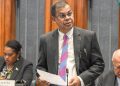
Fiji Prime Minister Sitiveni Rabuka has launched a new regional journalism body, the Pacific Centre for Communications and Journalism, at Fiji National University, as he opened the eighth Pacific Media Summit in Savusavu on Wednesday. Pacific Media Network reports he was accompanied by Deputy Prime Minister Manoa Kamikamica, and that the centre is a partnership between the university, known as FNU, and the Fijian Media Association.
Key facts
- The centre will provide training, research and regional cooperation, including work on digital journalism, media literacy and the responsible use of artificial intelligence, according to Pacific Media Network.
- FNU vice chancellor Professor Unaisi Nabobo-Baba attended the launch, the outlet reports.
- This year’s summit theme is “Reaching the Remote: Media and Digital Innovation for a Connected Blue Pacific”.
- More than 200 people are taking part, RNZ Pacific reports; Pacific Islands News Association (PINA) president Kalafi Moala called it the biggest attendance a PINA conference has had.
- Rabuka said his government had repealed Fiji’s Media Industry Development Act and widened access to the Public Service Broadcasting Grant.
Why it matters
The launch puts a training and research institution behind a regional press corps that its own leaders say is stretched. PINA, the regional body for Pacific news organisations, is simultaneously questioning whether it reaches the communities it claims to serve, according to Pacific Media Network. For Fijian readers, the centre sits inside a government that has already changed the country’s media law, and that Rabuka says now wants journalists to scrutinise it harder.
What the centre is meant to do
Rabuka said the centre could help develop the next generation of Pacific media leaders and should become a regional platform for knowledge, skills and collaboration, Pacific Media Network reports. He set out the objective plainly at the launch: “We must and we want and we need a media sector that is independent, professional, credible, and trusted and trustworthy.”
Neither source reports a budget figure, a start date for courses or student numbers for the centre.
Rabuka’s message to the newsroom
The Prime Minister told the summit that journalists must ask difficult questions, investigate and hold institutions to account, and should expose corruption, abuse of power and failure in public administration where the evidence demands it, Pacific Media Network reports. He said that strengthens democracy rather than threatening it — a message delivered as his government also works through his government’s constitutional timetable.
He also warned about the speed of digital distribution, saying a headline can reach thousands of people before the facts have been checked and a false claim can spread before the truth has left the newsroom. Journalists, he said, needed to maintain professional standards while adapting to artificial intelligence and other emerging technologies.
PINA asks what it is for
Moala, who RNZ Pacific notes is also its correspondent in Tonga, used the record turnout to raise a harder question about the association itself. Pacific Media Network quotes him asking what PINA’s real reason for existence is and what its purpose should be.
He called for PINA to consider restructuring so it can expand outreach to remote and underrepresented parts of the region, naming French Polynesia, New Caledonia and West Papua as places where engagement could be stronger. A stronger subregional structure across Polynesia, Melanesia and Micronesia could help, he said. Moala added that media were not reaching the people most affected by climate change — a gap he described as bigger than technology, artificial intelligence or misinformation.
Crime, money and the pre-summit workshop
The summit’s pre-opening workshop covered climate change, corruption and transnational organised crime. Marie Pegie Cauchois, Pacific Regional Anti-Corruption Adviser at the UN Office on Drugs and Crime (UNODC), the UN agency handling drugs and crime, told journalists governments should not focus only on drug seizures but on the profits criminal networks generate, Pacific Media Network reports.
She said the figures are not known — that neither New Zealand nor Australia knows how much passes through — and called for stronger laws to seize criminal proceeds, better information on who really owns companies set up in the region and in Australia, and more cross-border sharing of financial intelligence. Cooperation had to extend beyond the Pacific, she said, naming Colombia, Mexico and Southeast Asia. Her remarks echo UNODC’s warnings about criminal profits in the region.
Reporting risks and access
At a Savusavu panel on organised crime, Moala said journalists investigating drug trafficking face increasing threats to their safety, RNZ Pacific reports. He recalled a journalist from Tonga’s Kele’a newspaper who reported on Tongan gangs and was threatened at the newspaper’s office by a gang member the following day. Organised crime in Tonga has become more sophisticated, he said, and scrutiny must continue while reporters are protected.
A Fijian media leader also raised access to information. RNZ Pacific identifies her as Rosi Doviverata of Women in Media Fiji; Pacific Media Network’s photo caption names Rosi Tamani-Doviverata as president of the Fijian Media Association. She said reporters can wait two or three months for ministry responses, which holds up reporting on community issues, and credited male allyship and support from colleagues and editors for the progress of women in Fiji’s newsrooms. Those themes also ran through the Savusavu summit’s opening days.
One timing note
Pacific Media Network, published 22 September, describes the summit as having opened on Wednesday. RNZ Pacific, published 23 September, says the summit officially begins on Wednesday. Neither source gives a closing date.
Frequently Asked Questions
Who is behind the new Pacific Centre for Communications and Journalism?
Pacific Media Network reports the centre is a partnership between Fiji National University and the Fijian Media Association. It was launched by Prime Minister Sitiveni Rabuka at FNU, with Deputy Prime Minister Manoa Kamikamica and FNU vice chancellor Professor Unaisi Nabobo-Baba present.
What is this year’s Pacific Media Summit theme?
According to Pacific Media Network, the theme of the eighth summit is “Reaching the Remote: Media and Digital Innovation for a Connected Blue Pacific”. Rabuka told the summit that meeting it means more than improving technology.
Which parts of the Pacific does PINA say it is not reaching?
PINA president Kalafi Moala told Pacific Media Network that French Polynesia, New Caledonia and West Papua were among the areas where the association could strengthen its engagement. He also said communities most affected by climate change were not being reached.
What has the Fiji government changed for the media sector?
Rabuka told the summit his government had repealed Fiji’s Media Industry Development Act and widened access to the Public Service Broadcasting Grant, Pacific Media Network reports. He also urged journalists to investigate and expose corruption, abuse of power and failures in public administration.