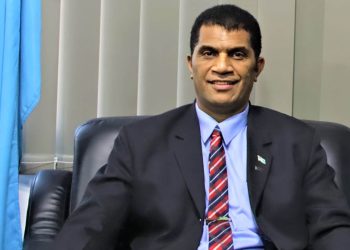
A Japanese university student has spent time in Lautoka asking young Fijians what they read, what they want to become and what makes them different from the people around them — and plans to carry their handwritten answers back to classrooms in Japan. Yuuha Tomura built the project, called Stories of Fiji, while taking part in the Social Innovation Fiji (SIF) programme, the Fiji Sun reported on 23 September 2026.
According to the Fiji Sun, Tomura wanted to move past the single national label and reach the person behind it — their hopes, interests, values and plans for the future. She told the paper she wanted to know how each person thinks, what they value and what makes them unique.
Key facts
- Who: Yuuha Tomura, a Japanese university student, as reported by the Fiji Sun on 23 September 2026.
- What: a documentation project called Stories of Fiji, created during the Social Innovation Fiji (SIF) programme.
- Where: Lautoka, on the western side of Viti Levu — Fiji’s second-largest urban centre, with about 71,000 people in its urban area at the 2017 census, according to the Fiji Bureau of Statistics.
- Who took part: mainly young people and students; the Fiji Sun reported no participant count.
- What they were asked: their favourite books, future aspirations, personal values and what makes them different from others.
- The format: handwritten responses on printed interview sheets, paired with photographs of participants who gave permission for their images to be used.
- Stated framing: linked by the Fiji Sun to Sustainable Development Goal 16 — Peace, Justice and Strong Institutions.
- Next step: Tomura plans to take the completed project back to Japan and share it with schools and young people; no date or named school has been announced.
How the collection was built
Tomura started with face-to-face interviews, the Fiji Sun said, and then tried to widen the reach of the project using an online form. She ran into a practical barrier: not every student she approached had easy access to a smartphone. Rather than shrink the project to whoever could fill in a Google Form, she printed interview sheets so people could write their answers out by hand.
That is the most concrete detail in the whole account, and it cuts two ways. It explains why the finished collection looks the way it does — pages of individual handwriting rather than rows in a spreadsheet — and it is a first-hand observation about device access among the Lautoka students she happened to meet. It is not a survey. The Fiji Sun reported no sample size, no schools and no method beyond the switch itself, so it tells you what one collector ran into on the ground and nothing more.
The paper reported that the resulting collection pairs those handwritten responses with photographs of participants who agreed to have their images used, and published images of Tomura with Lautoka youths alongside its report. The handwritten answers themselves have not been published.
The questions behind it
The questions the Fiji Sun listed were deliberately personal rather than national: what participants like to read, what they want to become, what they hold to be important, and what sets them apart from the people around them. None of them asks the respondent to speak for Fiji.
The Fiji Sun said the idea was also shaped by Tomura’s own experience in Japan, where, she told the paper, some young people are not confident and worry about being different from others. She said she wants to tell them that it is okay to be different and that their individuality is important — which is why the questionnaire is built around difference rather than nationality.
Why it matters
The Fiji Sun reported that Tomura hopes the project will give Japanese students a different way of seeing Fiji — not only through tourism, beaches and popular images, but through the real experiences, hopes and voices of young Fijians.
Where she collected those voices sharpens the point. Lautoka is a working city rather than a resort strip: it is one of the two international ports operated by Fiji Ports, alongside Suva, and it hosts one of the country’s sugar mills, as listed by the Fiji Sugar Corporation. The young people answering Tomura’s questions live in a port-and-cane economy, in the city the Fiji Bureau of Statistics ranks second after Suva — not in the postcard the project is aimed at replacing.
That ambition also sits on the same fault line as a much larger Fijian project. Fiji News reported earlier on the launch of the FNU Pacific Journalism Centre in Savusavu, which exists to train Pacific people to report on their own region rather than leave that work to visiting correspondents. Stories of Fiji is the mirror image of that logic and the weaker version of it: the collector is an outsider, and the project’s credibility rests on the fact that she stopped writing and handed participants the pen. What travels to Japan is their handwriting, not her summary of it.
Which is why one absence in the published account is worth naming plainly: the only voice quoted anywhere is Tomura’s. No participant is named, no answer is reproduced, and the young people at the centre of the project are described rather than heard. For readers in the diaspora, that is the appeal and the limit in one — the material is first-person in form, but it has so far reached the public only as a single newspaper report about it.
The framing, and the gaps
On the development label: SDG 16 is one of the 17 goals in the United Nations’ 2030 Agenda, adopted by member states in 2015, and the UN’s own description of Goal 16 frames it around peace, justice, inclusion and accountable institutions. The Fiji Sun tied Stories of Fiji to it through the project’s emphasis on understanding, respect and listening to different perspectives — a loose reading of a goal normally measured at national scale, and the project’s own framing rather than any formal recognition. Beyond that, this report rests on one Fiji Sun article: Fiji News has not spoken to Tomura, any participant or Social Innovation Fiji, and the paper did not report how many young people contributed, how long the fieldwork took, which schools were involved, who runs or funds SIF, or whether the collection will be published online, shown in Fiji or exhibited in named Japanese schools.
What happens next
Tomura plans to take Stories of Fiji back to Japan and share it with schools and young people there, according to the Fiji Sun. She told the paper: “I hope the stories I collected in Lautoka can become a small bridge between young people in Fiji and Japan.”
The test of that will be whether the collection is actually seen — in a Japanese classroom, in a published form, or back in Lautoka where the answers came from. What began as one university student’s fieldwork, the Fiji Sun concluded, has turned into an exchange of stories, dreams and perspectives with the potential to carry young Fijian voices well beyond Fiji’s shores. Whether it does is not something a single newspaper report can settle, and Fiji News will update this report if the collection, or the participants, surface in their own words.
Related: Fiji and Japan also meet on the field — Fiji News reported on the Flying Fijians contesting the Pacific Nations Cup final against Japan.
Frequently Asked Questions
What is Stories of Fiji?
Stories of Fiji is a documentation project by Japanese university student Yuuha Tomura, created while she took part in the Social Innovation Fiji (SIF) programme. According to the Fiji Sun, it collects handwritten responses from young people in Lautoka about their favourite books, future aspirations, personal values and what makes them different from others, paired with photographs of participants who gave permission for their images to be used.
How many young people took part?
The Fiji Sun did not report a participant count, and Fiji News has not seen a figure published anywhere else. The paper described the contributors as mainly young people and students in Lautoka but gave no number, no breakdown by school and no date range for the fieldwork.
Why did the project use printed interview sheets instead of an online form?
Tomura began with face-to-face interviews and then tried to gather responses through Google Forms, according to the Fiji Sun. She found that not every student she approached had easy access to a smartphone, so she switched to printed interview sheets that participants filled in by hand. The switch kept people in the project who would otherwise have been left out — and it is the reason the finished collection is pages of handwriting rather than rows in a spreadsheet.
Is Stories of Fiji linked to any development goal?
The Fiji Sun reported that the project is linked to Sustainable Development Goal 16 — Peace, Justice and Strong Institutions — and said that link reflects its focus on understanding, respect and listening to different perspectives. Readers should treat that as the project’s own framing: the Fiji Sun reported no formal UN or government recognition, and Fiji News has seen none.
Do any participants speak in the published account?
No. The only person quoted in the Fiji Sun report is Tomura. No Lautoka participant is named or quoted, and none of the handwritten answers is reproduced, so the young people at the centre of the project are so far described rather than heard. Fiji News has not been able to reach any participant independently.
What did Tomura say about young people in Japan?
She told the Fiji Sun that some young people in Japan are not confident and worry about being different from others. She said she wants to tell them that it is okay to be different and that their individuality is important, and hopes the Lautoka voices will encourage Japanese students to embrace their own.
Has anyone other than the Fiji Sun reported on the project?
Not that Fiji News has seen. At the time of writing this report rests on a single Fiji Sun article published on 23 September 2026. Fiji News has not obtained a statement from Social Innovation Fiji or from Tomura directly, and has not independently verified the account.