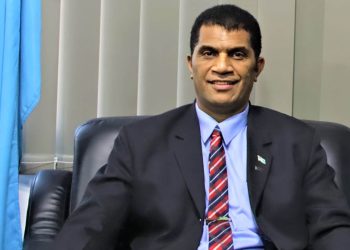
Fiji’s Higher Education Commission has accused foreign researchers of coming into the country and taking indigenous and local knowledge for their own benefit, in evidence given to a parliamentary committee on 22 September. HEC director Eci Naisele made the allegation while presenting the commission’s submission on the Fiji-Australia Vuvale Union and the Ocean of Peace Alliance to Parliament’s Standing Committee on Foreign Affairs and Defence, Fiji Sun reported the following day.
Key facts
- Who: Eci Naisele, director of the Higher Education Commission, Fiji’s higher education regulator, appearing with HEC manager communications Epi Rawalai.
- Where: the Standing Committee on Foreign Affairs and Defence, chaired by Assistant Minister for Foreign Affairs Lenora Qereqeretabua.
- The allegation: Naisele said there had been numerous publications written in Fiji by foreign authors who were not the owners of the information.
- New gatekeepers: researchers wanting to work in villages must now go through the Ministry of iTaukei Affairs, and education-related research must also be cleared by the Ministry of Education.
- New body: a newly established Research Council is scrutinising research partnerships more closely before approval.
- Not specified: what knowledge was allegedly taken, how many publications are involved, or who wrote them.
- Source: Fiji Sun, 23 September 2026, reporting the previous day’s committee hearing.
What knowledge, and whose?
The core of the complaint is left abstract in the reported evidence. Naisele spoke of publications written in Fiji by authors who did not own the information, without saying whether the material at issue was traditional medicine, fishing and ecological practice, oral history and genealogy, language, or something else. No paper, journal, author, institution or country is named in the Fiji Sun’s account, and no figure is given for how many publications the commission believes are affected.
What he was specific about is where ownership sits. Naisele located it with what he called the wisdom holders of the people of the vanua. In iTaukei — indigenous Fijian — usage, vanua is not simply land: it is a place together with the people who belong to it and the chiefly and customary authority that binds them. The wisdom holders are the elders and custodians within that unit who carry its knowledge. On that reading, a village’s knowledge has identifiable owners even when it has never been written down, and a researcher who publishes it without recognising them has taken something rather than recorded it.
The distinction the commission is drawing is about consent and credit rather than distance. Fijian material travelling overseas is not itself the grievance: in community-led projects, Fijians themselves have sent their own writing abroad as authors of it. Naisele’s objection, as reported, is to research published without the knowledge holders’ recognition.
Why it matters
The complaint lands in the middle of Parliament’s scrutiny of two agreements with Australia, and it ties a cultural grievance to a question of foreign policy: who gets to study Fiji, on whose terms, and who is credited when the results are published.
It also signals a procedural change for anyone planning fieldwork here. Universities, consultants and aid-funded research teams that once negotiated access village by village now face named ministries and a council standing between them and approval, according to the Fiji Sun’s account of the hearing. For a postgraduate student or a donor-funded evaluation team working to a fixed timetable, the practical question is how long those clearances take — a figure the report does not supply.
What Naisele told the committee
Naisele framed the new controls as a response to past experience. “Because of what has happened in the past, people just come and I would say poach whatever that was rightly ours,” he told the committee, in remarks reported by the Fiji Sun.
He said foreign authors had published research carried out in Fiji without properly recognising the owners of that knowledge. The report does not say whether any complaint has been lodged with a publisher, a university research-integrity office or a court, whether any publication has been withdrawn or corrected, or whether the commission is seeking acknowledgement, royalties or the return of materials.
New clearances for fieldwork
Under the arrangements Naisele described, research conducted in villages must be routed through the Ministry of iTaukei Affairs. Research touching on education must additionally be cleared by the Ministry of Education. The Fiji Sun does not report when the requirements took effect, how long approvals take, how many applications have been lodged, approved or refused, or what happens to projects already under way. Nor does it say what sanction, if any, applies to a researcher who bypasses the process.
The treaty question
The exchange took place because the commission was submitting on the Fiji-Australia Vuvale Union and the Ocean of Peace Alliance, which the Fiji Sun says is also known as the Veitacini Treaty. Qereqeretabua asked whether the treaty could limit Fiji’s ability to approve research partnerships with institutions from China or other non-Western countries.
Naisele replied that such partnerships were being scrutinised more closely by the newly established Research Council, to ensure proper procedural protocol before any research was approved, the newspaper reported. He did not, on that account, point to any clause of either agreement dealing with research, data or intellectual property. The submission follows other cautionary evidence to MPs on the same agreements, including a traditional leader who warned MPs not to rush the security treaties with Australia.
Australian-supported training
Rawalai told the committee that Australian-supported training must remain aligned with Fiji’s own quality standards and avoid duplicating programmes that already exist locally, according to the Fiji Sun. The report does not identify which Australian-funded programmes prompted that point, how many are running, or which local courses the commission considers to be duplicated.
The duplication concern arrives as Fiji’s tertiary sector adds capacity of its own, including the new Pacific journalism centre at the Fiji National University in Savusavu — a domestic facility of exactly the kind the commission says donor-funded training should complement rather than replicate.
The numbers on the record — and the ones missing
What the reported evidence quantifies is thin, and worth setting out plainly.
- 2 agreements under committee scrutiny: the Fiji-Australia Vuvale Union and the Ocean of Peace Alliance.
- 2 HEC officials before the committee: Naisele and Rawalai.
- 2 ministries now acting as clearance points: iTaukei Affairs and Education.
- 1 new Research Council, with no establishment date, membership list or stated legal power in the report.
- 0 publications, authors, universities or countries named in the poaching allegation.
- No figure for how many publications “numerous” covers, how many research applications have been processed under the new gates, how long clearance takes, or what penalties apply.
Sourcing and what is still unclear
This report rests on a single account: the Fiji Sun’s 23 September write-up of the previous day’s hearing. Fiji News has not independently verified the allegation, and no public response had been reported at the time of writing from the Ministry of iTaukei Affairs, the Ministry of Education, the Research Council, the Higher Education Commission beyond its committee evidence, or any Australian university, agency or researcher. No transcript or written submission from the hearing has been published. Any response from those parties will be added to this report.
Beyond the missing figures, the open questions are structural: the Research Council’s legal basis, whether its decisions can be appealed, whether the clearance requirements sit in regulation or in policy, and whether the commission wants language on research and intellectual property written into the treaty text itself. The committee’s deliberations on the Vuvale Union and the Ocean of Peace Alliance were continuing at the time of the report.
Frequently Asked Questions
What must a foreign researcher now do before working in a Fijian village?
On the account given to Parliament, there are three gates. Village-based research must be routed through the Ministry of iTaukei Affairs; anything touching education must also be cleared by the Ministry of Education; and the research partnership itself is examined by a newly established Research Council before approval. The Fiji Sun report does not state processing times, application fees, penalties for skipping the steps, or how projects already in the field are treated.
What do ‘vanua’ and ‘wisdom holders’ mean in this context?
In iTaukei (indigenous Fijian) usage, vanua means more than land: it covers a place, the people belonging to it and the chiefly and customary authority that binds the two. ‘Wisdom holders’ are the elders and custodians within that unit who hold its traditional knowledge. The commission’s argument is that ownership of knowledge gathered in a community sits with those holders, not with the visiting researcher who writes it up.
What kind of indigenous knowledge does the Commission say was taken?
It did not say. The allegation as reported refers to ‘numerous publications’ written in Fiji by foreign authors who were not the owners of the information, without specifying whether the material was traditional medicine, ecological or fishing practice, oral history, genealogy or language. No publication, author, university or country is identified, and no count of affected works is given.
Would the Australia agreements limit Fiji’s research ties with China?
That was the question put by committee chair Lenora Qereqeretabua, the Assistant Minister for Foreign Affairs. Naisele did not point to any clause of the Vuvale Union or the Ocean of Peace Alliance; he answered that partnerships with institutions from China and other non-Western countries are now scrutinised more closely by the Research Council to ensure proper procedural protocol before approval.
Has anyone named in the allegation responded?
No response has been reported. The account rests on a single Fiji Sun report of the 22 September hearing, and no public comment from the Ministry of iTaukei Affairs, the Ministry of Education, the Research Council, Australian institutions or any accused researcher had been reported at the time of writing. The committee’s work on both agreements was continuing.