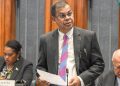
An Auckland law academic has urged Pasifika voters in New Zealand — including one of the largest Fijian diaspora populations in the world — to judge political parties on what they have actually delivered for Pacific communities rather than on what they are promising, ahead of the 7 November election. Dr Suliana Mone made the comments to RNZ’s Pacific Waves programme in an item published on 24 September, as parties including New Zealand First and Labour set out immigration policies aimed specifically at Pacific migrants, RNZ reported.
Her core argument is blunt: under New Zealand’s proportional voting system, the immigration sweeteners being offered to Pacific communities are among the first things that can be bargained away once the votes are counted — and they are not what Pacific households say they most need anyway.
By the numbers
- About 442,600 — the size of New Zealand’s Pacific peoples ethnic group in the 2023 Census, or roughly 8.9 percent of the population, up from about 381,600 in 2018, per Stats NZ’s 2023 Census population counts by ethnic group.
- More than F$1 billion a year — personal remittance inflows to Fiji in recent years, as reported in Reserve Bank of Fiji statistical releases, placing them alongside tourism as a pillar of Fiji’s foreign exchange earnings. Australia, New Zealand and the United States are the principal source countries.
- 78.2 percent — turnout among enrolled voters at New Zealand’s 2023 general election, on New Zealand Electoral Commission figures. Enrolment and turnout among Pacific voters have historically tracked below the national average.
- Six weeks — the gap between the 14 October 2023 vote and the 24 November 2023 signing of coalition agreements between National, ACT and New Zealand First, the window in which campaign policies are traded.
- Zero — reserved Pacific parliamentary seats. New Zealand has seven Maori electorates; there is no Pacific equivalent.
Census, remittance, turnout and coalition figures are sourced independently from Stats NZ, the Reserve Bank of Fiji and the New Zealand Electoral Commission. RNZ’s report carries none of them.
Why this matters in Fiji, not just in Auckland
New Zealand’s immigration settings are a Fiji economic story as much as a New Zealand political one. That billion-dollar-plus remittance flow competes with tourism as Fiji’s largest earner of foreign exchange, and unlike tourism receipts it lands in household budgets rather than state accounts — school fees, building materials, funeral costs, loan repayments. It is spending power created by decisions taken in Wellington by a parliament no Fijian resident votes for.
Every visa category, work pathway and residence rule debated during this campaign therefore has a second-order effect in Suva, Nadi and Labasa. A policy that widens work entry lifts the number of Fijians earning in New Zealand dollars; a policy quietly dropped in a coalition deal does the opposite, silently, and with no announcement in Fiji to mark it. Readers following that flow can track our continuing coverage of Fiji’s remittance economy.
The size of the Fiji-linked community in New Zealand is also routinely understated. Stats NZ records Indo-Fijian New Zealanders under Indian ethnicity rather than as Pacific peoples, so the “Fijian” ethnicity count captures only part of the population with family and financial ties to Fiji — and a Pasifika-targeted campaign pitch may not even be read as aimed at a large share of the diaspora it would affect.
That is the constituency Mone is addressing when she tells RNZ to look past the promise and at the record.
What a visa waiver would — and would not — change
RNZ does not name the party behind the visa waiver proposal or publish its text, so the policy cannot be assessed directly. What can be established is what visa-waiver status ordinarily means in New Zealand law, and it explains why Mone ranks it below bread-and-butter issues.
Under Immigration New Zealand‘s published rules, a visa waiver applies to visitors: nationals of listed countries do not have to apply for a visitor visa before travelling, though they still need an NZeTA and are barred from taking up employment. Paid work requires a separate work visa; residence requires another process again. Fiji is not on that waiver list, so Fiji passport holders currently apply for a visitor visa — the gap a waiver would close.
The practical effect would be real but narrow: cheaper, faster travel for weddings, funerals, graduations and short business trips, and fewer refusals at the application stage. It would not, on its own, put a single extra Fijian into a New Zealand payroll, which is where remittances are generated. That is the distinction buried inside Mone’s assessment that a waiver is “a great thing” but not the priority — the household economics of the diaspora run through work visas, wages and housing costs, not visitor access.
Neither RNZ’s report nor this one carries a Fiji-side economic assessment of the proposal; no Fiji-based economist commentary on the policy was available at the time of writing, and the absence of published policy detail means any modelling of its remittance effect would be speculative.
Why promises may not survive an MMP government
Mone told RNZ voters should be realistic about how policy is actually made under Mixed Member Proportional representation. Parties that favour a visa waiver policy would still have to negotiate with others over the shape of a government, she said, and that could mean compromising on the policies they campaigned on.
“So while some parties may like this visa waiver policy, they are going to have to negotiate with other parties [about what] is the most likely outcome for leadership,” she said, in remarks reported by RNZ.
The mechanics support her point. As New Zealand’s Parliament and the Electoral Commission both set out, a party normally needs 5 percent of the party vote or a won electorate to enter the House, and outright single-party majorities have been rare since MMP was introduced in 1996. The 2023 precedent is instructive: manifesto commitments were reordered, deferred or dropped behind closed doors across the negotiation window before the three-party agreements were signed. Pacific-specific pledges, attached to a community with no reserved seats and no guaranteed bloc in the House, carry little structural protection in that process.
A call for a government report card
Beyond the campaign, Mone said voters should look for evidence of progress once a party is in office. She suggested politicians could be required to produce an annual report setting out the policies they campaigned on, their progress towards them and whether they were achieved.
There needs to be some kind of accountability mechanism during a government’s term, she said, because it cannot rest on trust alone. RNZ’s report does not indicate that any New Zealand party has adopted or costed such a mechanism, and Mone did not say which body would compile or audit the report, nor what would follow a failing grade.
Her proposal lands at a moment when Fiji’s own debate about parliamentary accountability is also live, and when there are questions over election timing at home — two arguments that, like hers, turn on whether written commitments bind the people who make them.
What Pacific voters say they are weighing
Mone said Pacific voters are interested in the same things as every other voter in New Zealand. She listed the cost of living crisis, affordable housing, education opportunities, pathways to employment and job security as the areas drawing the most interest.
Immigration policy has attracted attention among Pacific communities, she said, but it is not necessarily their biggest priority. She described Pacific people as more concerned with how they are getting by day to day.
RNZ does not report polling to test that characterisation, and no survey of Pacific voter priorities is cited in the piece. Mone’s assessment is presented as the judgement of an academic working in the field rather than as a measured result — a distinction worth holding onto, given how often campaign coverage treats a single community voice as a community verdict.
The role of churches and community groups
Asked how engagement could be lifted, Mone pointed to Pacific faith leaders and community groups as the most likely bridge between parties and voters. Churches, she said, function as the village — the social and political unit for Pacific people in Aotearoa New Zealand.
They could take a bigger role in promoting politics and policy, she told RNZ: clarifying what party policies are, how much a vote is worth, and how engaging with the political system could change people’s lives. She cited the Covid-19 vaccination rollout, when Pacific churches were used as delivery and messaging points, as evidence that the network can move people at scale when it is activated.
She also said Pacific youth are more involved in political debate than previous generations, while adding that more still needs to be done to draw Pacific people into civic processes. With Pacific enrolment and turnout historically running under the national rate set out above, and no reserved seats to guarantee representation, the gap she is describing converts directly into lost parliamentary leverage — and into weaker protection for exactly the promises she is warning voters about.
What New Zealand First and Labour say — and what is missing
RNZ names New Zealand First and Labour as the parties that have put immigration promises before Pacific migrant communities ahead of polling day. It does not quote either party, publish the text of their proposals, or carry a response to Mone’s criticism that such promises may not survive coalition talks.
That leaves a one-sided record. Readers learn what the policies are said to be only through Mone’s characterisation, and neither party has had the chance, in this report, to say whether it would defend a Pacific visa waiver in negotiations or trade it. This article has not independently obtained or verified either party’s published immigration policy, and no comment was available from either at the time of writing. Any reader weighing a vote on this issue should read the parties’ own manifestos alongside Mone’s assessment.
How we sourced this
The quotes and attributed claims about Dr Suliana Mone’s views come from RNZ, New Zealand’s public broadcaster, which published the interview through its Pacific current affairs programme Pacific Waves on 24 September. The supporting figures — census population counts, remittance volumes, turnout and the 2023 coalition timeline — are drawn from Stats NZ, the Reserve Bank of Fiji, the New Zealand Electoral Commission and Parliament, each linked above, and are provided as context RNZ’s report does not itself include. The description of how visa waivers operate comes from Immigration New Zealand’s published rules, not from any party’s policy document. Where a number is given as approximate, it is because published totals are revised or reported across differing periods.
Frequently Asked Questions
Why does a New Zealand election matter to Fiji?
Because money and people move both ways. Reserve Bank of Fiji reporting has put personal remittance inflows above F$1 billion a year in recent years, making them one of Fiji’s largest sources of foreign exchange alongside tourism, and New Zealand sits with Australia and the United States among the main source countries. Migration settings decided in Wellington therefore feed directly into Fijian household income. RNZ’s interview with Dr Suliana Mone does not make this link itself; it is added here as context.
How many Pacific people live in New Zealand?
Stats NZ’s 2023 Census counted the Pacific peoples ethnic group at roughly 442,600, or about 8.9 percent of New Zealand’s population, up from about 381,600 in the 2018 Census. Fiji-linked numbers are harder to read, because Stats NZ records Indo-Fijian New Zealanders under Indian ethnicity rather than as Pacific, which means ethnicity counts understate the size of the community with ties to Fiji.
What is the visa waiver policy Dr Mone referred to?
RNZ did not name the party or publish the policy text, so the proposal cannot be identified from the report. Mone said only that some parties "may like this visa waiver policy", that it could be traded away in coalition negotiations, and that while it is "a great thing" it is not, in her view, the priority for Pacific people. For context, Fiji does not appear on Immigration New Zealand’s published visa-waiver list, so Fiji passport holders currently apply for a visitor visa before travelling — the gap any waiver would close. This article did not independently obtain or verify the policy text.
Did New Zealand First or Labour respond to Dr Mone’s criticism?
No. Neither party is quoted in RNZ’s report, which names both as having put immigration policies before Pacific migrant communities but carries no response from either. Their positions reach readers only through Mone’s characterisation. This article has not independently verified either party’s published immigration policy, and no comment from either was available at the time of writing.
Does a New Zealand visa waiver allow Fijians to work there?
No. Under Immigration New Zealand’s rules, visa-waiver status covers short visits: it removes the need to apply for a visitor visa in advance, but travellers still require an NZeTA and are not permitted to take up employment. Paid work requires a separate work visa. That distinction is central to Mone’s argument that a waiver, while useful for family travel, is not the change that lifts Pacific household income.
Why can campaign promises disappear after a New Zealand election?
Under Mixed Member Proportional representation, a party normally needs 5 percent of the party vote or an electorate seat to enter Parliament, and single-party majorities are rare, so governments are usually assembled through negotiation. After the 14 October 2023 election it took until 24 November 2023 — about six weeks — for National, ACT and New Zealand First to sign coalition agreements, with policies traded in the process. Mone’s argument to RNZ is that Pacific-targeted promises are exposed to exactly that bargaining.
Do Pacific voters have reserved seats like Maori voters?
No. New Zealand has seven Maori electorates, but there is no equivalent Pacific roll or reserved seat. Pacific voters exercise influence through the general roll, through list MPs and through concentrated electorates in South and West Auckland — which is part of why Mone argues community mobilisation and post-election accountability matter so much.