Fiji’s tourism industry is using specialised beach access mats and carbon-fibre wheelchairs that can be taken into the sea, equipment that Rosie Travel Group managing director Tony Whitton said has already carried visitors with mobility challenges out to the Mamanuca sandbanks and into the water. Whitton made the comments in a report published by FBC News on 23 September 2026, in which he said the industry did not have the means to do this a year ago.
Whitton framed the change as a service standard rather than a gesture. “This accessibility and mobility segment is just as important as any other tourism segment, and it must be serviced with thoughtfulness and dignity,” he told the state broadcaster. The report was picked up from Suva by the Chinese news agency Xinhua on 24 September and carried by Malaysia’s The Star the following day.
The wheelchairs and mats, as described
Whitton’s account is specific on two items and silent on everything around them. The first is matting laid over sand so a wheelchair can be pushed from the treeline to the waterline — the part of a beach visit that ordinarily ends the trip for a wheelchair user, because standard tyres sink. The second is wheelchairs built from carbon fibre which, in his words to the broadcaster, “can now go into the ocean”.
The material is the whole claim. Carbon fibre does not rust the way a steel or aluminium frame does after repeated immersion in salt water, which is what distinguishes a chair that can be rolled into the sea from one that cannot. None of the three reports explains the specification, the weight limit, the depth the chairs are rated for, or who supplies them.
Xinhua and The Star repeat the same two items in the same terms — specialised beach access mats and carbon-fibre wheelchairs usable in the ocean — without adding a manufacturer, a unit count, or an explanation of how a guest actually gets hold of the equipment, whether through a resort, a tour operator or Rosie Travel Group itself.
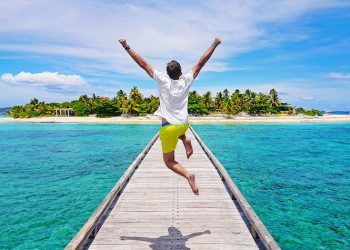
On location, the Mamanuca sandbanks are the only destination named anywhere in the chain. FBC News reported that visitors with mobility challenges can now be taken to places such as the sandbanks and into the ocean. No other beach, island group or property is identified, so the spread of the service cannot be established from the published record.
The Guillain-Barré syndrome case behind the push
FBC News reported that Whitton shared the experience of his godson, who became paralysed after developing Guillain-Barré syndrome, described by the broadcaster as a rare neurological disorder in which the immune system attacks the nerves. The godson spent more than 15 months recovering overseas before returning to Fiji, according to the report.
While recovering, FBC News reported, he had two wishes, one of which was to return to the ocean. The broadcaster did not say what the second wish was, and neither wire version fills the gap. Whitton said that experience prompted the question of why visitors with mobility challenges could not also enjoy Fiji’s beaches and oceans, according to the broadcaster — a paraphrase rather than a quotation in the FBC text.
That origin story matters for how the initiative should be read. As reported, this began as one family’s problem solved by one company, not as a sector standard drafted by anyone. The published record gives no indication that the equipment was specified with input from disability organisations in Fiji, and no such group is quoted.
How one Suva interview became an international story
Tracking what each outlet added — and dropped — shows how much of the story is independently established, which is none of it beyond the FBC interview.
| Outlet | Date | Sourcing | What it added or dropped |
|---|---|---|---|
| FBC News (Fiji Broadcasting Corporation) | 23 September 2026 | Original report, Fiji’s state broadcaster | Whitton’s direct quotes, the godson’s Guillain-Barré account, the Mamanuca sandbanks |
| Xinhua | 24 September 2026 | Suva dateline, credits FBC | Adds no equipment detail; frames the move as part of wider sector work on disability access |
| The Star (Malaysia) | 25 September 2026 | Bernama version citing Xinhua | Adds nothing; condenses the Xinhua text for a travel section, moving the story from news to lifestyle |
The versions also differ on timing. Xinhua referred to the FBC story as having appeared “Thursday”; The Star said only that the broadcaster had carried it “recently”. The FBC item itself is dated 23 September 2026, which fell on a Wednesday. The discrepancy is small, but it is the signature of a story being restated rather than re-reported: by the third version, the date of the original interview had dissolved into “recently”, and the reach of the service had hardened into a general claim about Fiji’s beaches.
An accessibility change with no official voice attached
The most consequential absence in the coverage is institutional. No ministry, regulator, Tourism Fiji representative or hotel and tourism association appears in any of the three reports, and no official statement is quoted. As published, the standard Whitton articulates — that accessibility should be serviced with the same seriousness as any other segment — carries no regulatory weight. It is a company’s position, reported by the state broadcaster, and nothing in the record obliges a second operator to match it.
That is the gap worth watching, because Fiji’s other live accessibility question sits squarely on the official side of the line: a proposal that Fiji Sign Language could be given official language status, which would create a recognised legal status rather than a voluntary service level. Accessibility in Fiji is currently advancing on two disconnected tracks — one through law and language policy, the other through equipment bought by a travel company — and the coverage of the wheelchairs shows no bridge between them: no funding line, no standards body, no requirement that anyone else follow.
The commercial case is asserted, not measured
Xinhua and The Star both presented the equipment as part of broader work to make Fiji’s natural attractions more inclusive, but neither puts a visitor number, an average spend or a market size on travellers with disabilities, and neither does FBC News. Whitton argued the segment deserves the same servicing standard as any other — a claim about how the industry should operate, not evidence of what it earns.
The contrast with the rest of the sector is stark. Source-market performance is reported down to the decimal point in Fiji, including Australian visitor spending of A$48.5m; accessible travel is not counted at all in the published record examined for this story. No Fijian figure for spending by visitors with disabilities appears in any of the three reports, and Fiji News has not located a published national estimate. Until one exists, the commercial argument for this equipment rests on Whitton’s judgement.
Ten questions the reports leave open
These are the specifics that would have to be established before the equipment could fairly be described as an industry-wide capability rather than one operator’s kit:
- Cost. No price in FJD, or any currency, for a mat or a chair.
- Quantity. No number of mats or wheelchairs in service.
- Ownership. No statement on whether Rosie Travel Group bought the equipment or whether it is shared across operators.
- Participants. No resort, hotel or tour operator is named as offering it.
- Booking. No indication of how a traveller requests the equipment, how far in advance, or whether it carries a fee.
- Supplier. No manufacturer or importer identified, and no specification for the chairs.
- Coverage. No location named beyond the Mamanuca sandbanks, and no storage or staging point given.
- Safety and training. No mention of staff training, transfer assistance, supervision in the water, or a weight or sea-state limit for taking a chair into the ocean.
- The rest of the journey. Nothing on the links either side of the beach — accessible transfers from Nadi, boat boarding to the Mamanucas, or accessible rooms and bathrooms on arrival.
- Timetable. No rollout schedule or target date for wider availability.
What would settle this
Four checkable things would convert this from a reported intention into a verifiable service: a unit count and location list from Rosie Travel Group; the names of resorts and boat operators willing to be booked for it; a booking route and price a traveller can actually use; and a statement from Fiji’s tourism authorities or industry association on whether any standard applies. Fiji News has not independently verified the equipment’s deployment and has not spoken to Rosie Travel Group; every fact above is attributed to the three published reports, all of which derive from the single FBC interview of 23 September 2026. This article will be updated if the company, participating operators, disability organisations in Fiji or the tourism authorities provide figures.
Frequently Asked Questions
What equipment is Fiji’s tourism industry using for visitors with mobility challenges?
Two items, and only two, are described across the three published reports: specialised beach access mats laid so a wheelchair can cross sand, and wheelchairs made from carbon fibre that can be taken into the sea. Rosie Travel Group managing director Tony Whitton described them to FBC News on 23 September 2026. No manufacturer, model, unit count or price appears in any of the three reports.
What exactly did Tony Whitton say in his own words?
The FBC News report carries a limited amount of direct quotation. Whitton is quoted saying the carbon-fibre wheelchairs “can now go into the ocean”, and, on how the segment should be treated: “This accessibility and mobility segment is just as important as any other tourism segment, and it must be serviced with thoughtfulness and dignity.” His other statements in the coverage — that the industry lacked the equipment a year ago, and that his godson’s experience prompted the push — are reported as paraphrase rather than as direct quotes.
Where in Fiji can wheelchair users now reach the water?
The Mamanuca sandbanks are the only location named in any of the three reports. FBC News said visitors with mobility challenges can now be taken to places such as the sandbanks and into the ocean, but no resort, island or other beach is identified, so the geographic reach of the service cannot be established from the published record.
What is Guillain-Barré syndrome?
FBC News described Guillain-Barré syndrome as a rare neurological disorder in which the immune system mistakenly attacks the nerves, causing weakness and, in severe cases, paralysis. The broadcaster reported that Tony Whitton’s godson became paralysed after developing the condition and spent more than 15 months recovering overseas before returning to Fiji. Readers should treat this as the broadcaster’s summary rather than clinical guidance.
What were the godson’s two wishes?
FBC News reported that while recovering, Whitton’s godson had two wishes, one of which was to return to the ocean. The broadcaster did not report what the second wish was, and neither Xinhua nor The Star adds that detail.
Is any Fiji government body or tourism authority involved?
None is named. No ministry, regulator, Tourism Fiji official or industry association appears in FBC News, Xinhua or The Star, and no official statement is quoted in any version. All three reports describe the equipment as something the tourism industry now has, with Rosie Travel Group the only organisation identified.
Who reported the story first?
The Fiji Broadcasting Corporation news website carried Whitton’s comments in a report dated 23 September 2026. Xinhua published a Suva-datelined story on 24 September crediting FBC, and The Star in Malaysia carried a Bernama version citing Xinhua on 25 September. All later versions trace back to the single FBC interview.